

Maharishi Ayurveda Amlant: Uses, Benefits, Dosage & Side Effects – Buy Now on Quikdu
What is Maharishi Ayurveda Amlant?
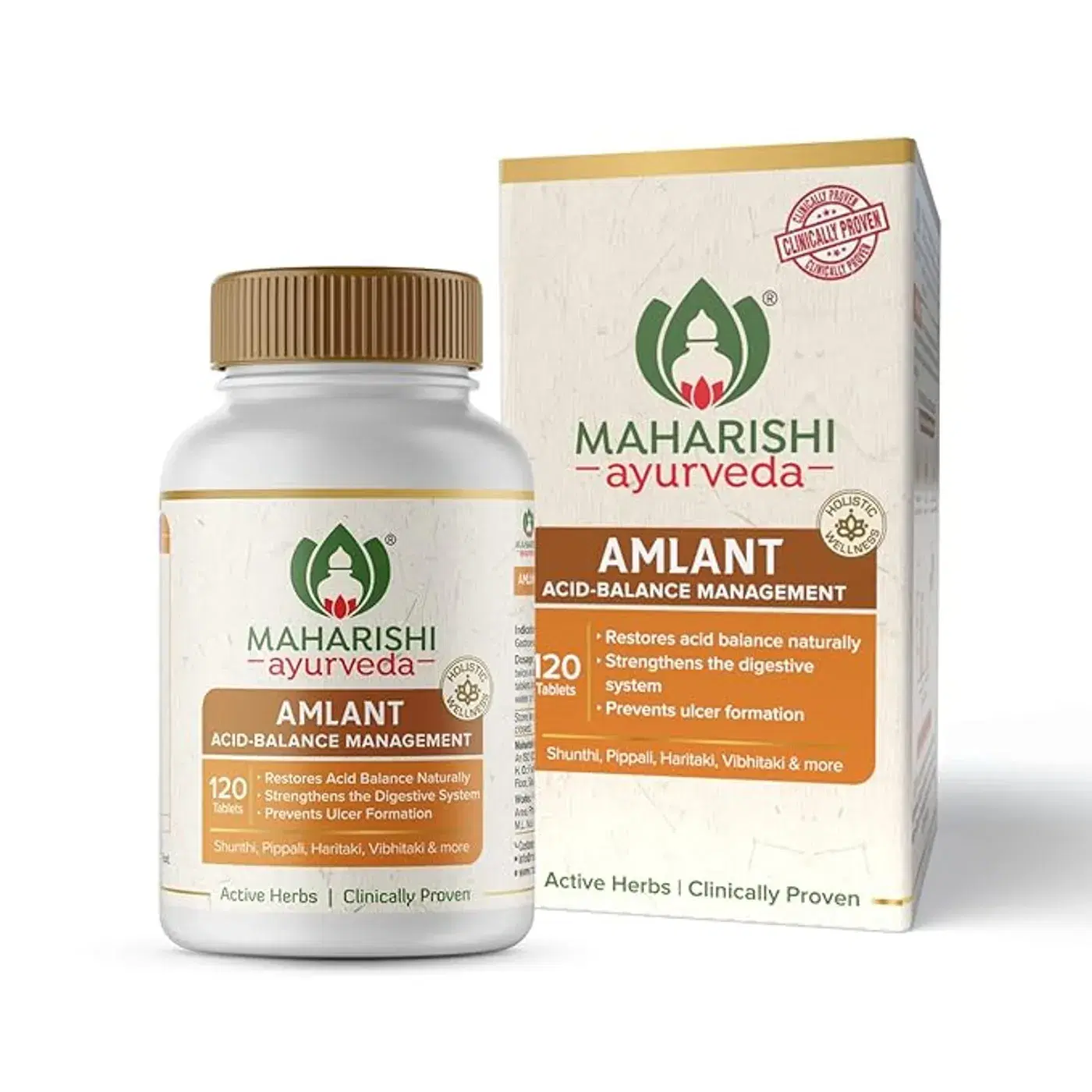
Maharishi Ayurveda Amlant is a classical Ayurvedic proprietary tablet formulated to relieve acidity, hyperacidity, heartburn, and indigestion. The word Amlant derives from the Sanskrit root amla (sour) and anta (end), literally meaning "ending sourness" — a precise description of its primary action. The formulation draws on principles outlined in the Charaka Samhita and Ashtanga Hridayam, both of which describe Amlapitta (hyperacidity) as a derangement of Pitta dosha aggravated in the stomach channel.
Manufactured by Maharishi Ayurveda Products Pvt. Ltd., Amlant combines time-tested herbs that pacify excess Pitta, strengthen digestive fire (Agni), and reduce toxic residue (Ama) in the gut. It is available on Quikdu as an over-the-counter Ayurvedic medicine.
- Product type: Proprietary Ayurvedic tablet
- Dosha action: Primarily Pitta-shamak (pacifies Pitta dosha); secondarily balances Vata
- Common uses: Acidity, heartburn, sour belching, indigestion, gastritis, bloating
- Prescription status: Over-the-counter (OTC); professional guidance recommended for chronic conditions
- Available on Quikdu: Yes — verified, authentic stock
Key Ingredients of Maharishi Ayurveda Amlant
Each Amlant tablet contains a synergistic blend of herbs traditionally used for digestive health. The table below maps every ingredient to its botanical identity, the plant part used, its Ayurvedic role, and what current research suggests.
| Ingredient (Sanskrit) | Botanical Name | Part Used | Ayurvedic Role | What Research Suggests |
|---|---|---|---|---|
| Shatavari | Asparagus racemosus | Root | Pitta-shamak, Rasayana (rejuvenating); soothes gastric mucosa | Saponins may protect gastric lining; animal models show anti-ulcer activity [1] |
| Amalaki | Phyllanthus emblica | Fruit | Tridosha-shamak; antioxidant, cooling | High vitamin C and tannins demonstrate gastroprotective and antioxidant effects in lab studies [2] |
| Yashtimadhu | Glycyrrhiza glabra | Root | Pitta-shamak; demulcent, anti-inflammatory | Glycyrrhizin shown to inhibit H. pylori growth and reduce gastric inflammation in human and animal studies [3] |
| Shuddha Shankha Bhasma | Purified conch shell (calcium carbonate) | Shell (calcined) | Antacid, digestive; neutralises excess acid | Calcium carbonate is a well-established antacid; Shankha Bhasma shows rapid acid-neutralising capacity in in-vitro models [4] |
| Pravala Pishti | Coral calcium | Coral (processed) | Cooling, Pitta-shamak; soothes burning sensation | Rich in calcium; traditionally used as an antacid; limited controlled human trials available [PMC search: Pravala Pishti gastric] |
| Kapardika Bhasma | Purified cowrie shell | Shell (calcined) | Antacid, digestive stimulant | Provides bioavailable calcium; alkaline action supports acid neutralisation [4] |
| Ela (Cardamom) | Elettaria cardamomum | Seed | Carminative, Vata-Pitta-shamak; reduces nausea and bloating | Essential oils shown to have gastroprotective effects in animal studies [5] |
How Does Maharishi Ayurveda Amlant Work?
Ayurvedic Perspective
According to Ayurveda, acidity or Amlapitta arises when Pitta dosha — the bio-energy governing heat and transformation — becomes aggravated in the Amashaya (stomach channel or Annavaha srotas). Weakened Jatharagni (digestive fire) leads to the formation of Ama (undigested toxic matter), which further inflames the gastric lining. Amlant's herbs collectively act as Pitta-shamak (Pitta-pacifying), Deepana (digestive stimulant), and Ama-pachana (Ama-digesting) agents, restoring balance in the Rasa and Rakta dhatus (plasma and blood tissues) affected by chronic hyperacidity.
Modern Scientific Perspective
From a pharmacological standpoint, the active compounds in Amlant's ingredients work through complementary mechanisms. Calcium carbonate minerals (Shankha Bhasma, Kapardika Bhasma) directly neutralise hydrochloric acid in the stomach [4]. Glycyrrhizin from Yashtimadhu inhibits acid secretion and promotes mucus production, protecting the stomach lining [3]. Antioxidant polyphenols from Amalaki reduce oxidative stress in the gastric mucosa [2], while steroidal saponins in Shatavari may promote mucosal healing [1]. It is important to note that most research has been conducted on individual ingredients; controlled clinical trials on the complete Amlant formula are limited.
Uses and Benefits of Maharishi Ayurveda Amlant
1. Relief from Acidity and Heartburn
Amlant is primarily used for Amlapitta, the Ayurvedic equivalent of hyperacidity and gastro-oesophageal reflux. The mineral bhasmas in the formula act as natural antacids, neutralising excess stomach acid rapidly [4]. Regular use may support a reduction in the frequency of heartburn episodes when combined with dietary changes.
2. Ayurvedic Medicine for Indigestion and Bloating
This Ayurvedic medicine for indigestion targets sluggish Agni (digestive fire) that leads to bloating, heaviness, and flatulence after meals. Cardamom (Ela) and other carminative herbs help expel trapped gas and ease post-meal discomfort [5]. Amlant tablets are traditionally used to improve overall digestive efficiency.
3. Soothing Gastric Inflammation
Yashtimadhu contains glycyrrhizin and flavonoids that have demonstrated anti-inflammatory activity in the gastric mucosa in animal and human studies [3]. This may help soothe the burning pain associated with gastritis. The cooling, demulcent properties of Shatavari further support mucosal integrity [1].
4. Reducing Sour Belching and Nausea
Sour belching (Udgara) and nausea are hallmark symptoms of aggravated Pitta in the stomach channel. The alkaline mineral compounds and cooling herbs in Amlant help restore a balanced gastric pH environment [4]. Many users report reduced frequency of sour belching within the first few days of use, as observed in traditional clinical practice.
5. Antioxidant Support for Gut Health
Amalaki is one of the richest natural sources of vitamin C and tannins, compounds with well-established antioxidant properties [2]. Oxidative stress in the gastric mucosa is increasingly recognised as a driver of chronic gastritis and peptic ulcer disease. Regular intake of Amlant may provide antioxidant benefits that support long-term gut health (lab evidence; human trials needed).
6. Supporting a Healthy Appetite
Chronic acidity and indigestion frequently suppress appetite (Aruchi) by creating a toxic, acidic environment in the stomach. By reducing Ama and rebalancing Agni, Amlant tablets may help restore a healthy, regular appetite. This is consistent with the Deepana-Pachana (digestive-stimulating and Ama-digesting) action described in classical Ayurvedic texts.
7. Adjunct Support During Stress-Related Acidity
Stress is a well-known trigger for Pitta aggravation and acid hypersecretion in modern Ayurvedic clinical practice. Amalaki has demonstrated adaptogenic properties in preclinical studies, potentially helping the body manage stress-induced digestive disturbances [2]. Amlant is traditionally used as a supportive remedy during periods of mental or physical stress that worsen acidity.
Dosage and Directions for Maharishi Ayurveda Amlant
Always follow the dosage printed on the product label or as directed by a qualified Ayurvedic physician. The general guidelines below are for reference only.
| Parameter | Guideline |
|---|---|
| Adult dose | 1–2 tablets, twice daily (or as directed by a physician) |
| When to take | After meals, or immediately when acidity symptoms occur |
| Anupana (vehicle) | Lukewarm water or plain water; avoid with hot, spicy beverages |
| Duration | 4–8 weeks for chronic conditions; shorter for acute episodes |
| Children (under 12) | Only under paediatric Ayurvedic supervision; not routinely recommended |
| Elderly patients | Start with the lower dose; monitor for constipation due to calcium content |
| Pregnancy & lactation | Consult a qualified physician before use |
Important: Do not exceed the recommended dose. Always read the product label carefully and consult your Ayurvedic doctor if symptoms persist beyond two weeks.
Side Effects and Safety of Maharishi Ayurveda Amlant
Maharishi Ayurveda Amlant is generally considered safe when taken at recommended doses. However, certain individuals should exercise caution.
Possible side effects:
- Constipation — possible with high or prolonged doses of calcium-containing bhasmas [4]
- Mild nausea in sensitive individuals when taken on an empty stomach
- Excessive use of Yashtimadhu-containing products over long periods may affect blood pressure or potassium levels [3]; use Amlant as directed, not long-term without supervision
Who should avoid or use only under supervision:
- Pregnant and breastfeeding women: Consult a physician before starting any Ayurvedic supplement
- Patients with kidney disease or hypercalcaemia: Calcium-rich bhasmas may not be appropriate
- People on antihypertensive or diuretic medications: Yashtimadhu may interact with these drugs [3]
- Individuals with chronic constipation: Calcium carbonate compounds can worsen constipation
- Patients already on proton pump inhibitors (PPIs) or H2 blockers: Inform your doctor about concurrent use
General precautions: Store in a cool, dry place away from direct sunlight. Keep out of reach of children. Do not use beyond the expiry date printed on the pack.
Diet and Lifestyle Tips to Enhance the Benefits of Amlant
- Eat at regular times: Irregular meal timings are a primary cause of Agni imbalance; eat at the same times each day to stabilise digestive fire.
- Avoid Pitta-aggravating foods: Reduce intake of spicy, sour, fried, and fermented foods, as well as excess tea and coffee, which increase acid secretion.
- Stay hydrated with cooling liquids: Coconut water, buttermilk (Takra), and coriander-infused water are traditional Ayurvedic remedies that complement Amlant's action.
- Do not eat late at night: Lying down shortly after dinner increases gastric reflux; finish your last meal at least two hours before bedtime.
- Manage stress with Yoga and Pranayama: Practices like Sheetali Pranayama (cooling breath) and gentle Yoga asanas reduce stress-driven Pitta aggravation.
- Avoid smoking and alcohol: Both significantly impair gastric mucosal defence and counteract the benefits of Ayurvedic acidity management.
Frequently Asked Questions About Maharishi Ayurveda Amlant
1. What is Maharishi Ayurveda Amlant used for?
Maharishi Ayurveda Amlant is used for acidity, heartburn, sour belching, indigestion, bloating, and gastritis. It is an Ayurvedic medicine formulated to pacify aggravated Pitta dosha in the stomach. It is available over the counter and on Quikdu for convenient home delivery.
2. How quickly does Amlant work for acidity?
Many users report relief from acute acidity symptoms within 30–60 minutes of taking Amlant tablets, due to the rapid antacid action of the mineral bhasmas. For chronic acidity, consistent use over 4–8 weeks is generally recommended. Individual responses may vary depending on diet and lifestyle.
3. Can I take Amlant daily for a long time?
Short-term daily use (up to 8 weeks) is considered safe for most adults at the recommended dose. Long-term use without a break is not advised without consulting an Ayurvedic physician, particularly due to the calcium content and presence of Yashtimadhu. Always follow the label instructions.
4. Is Amlant safe during pregnancy?
Pregnant and breastfeeding women should consult a qualified Ayurvedic or medical doctor before taking Amlant. Some ingredients, including Yashtimadhu, require professional guidance during pregnancy. Self-medication during pregnancy is not recommended.
5. What are the main ingredients in Amlant tablets?
Amlant tablets contain Shatavari, Amalaki, Yashtimadhu, Shuddha Shankha Bhasma, Pravala Pishti, Kapardika Bhasma, and Ela (cardamom). Each ingredient is selected for its traditional role in pacifying acidity and supporting digestion. The full proprietary formula is listed on the Maharishi Ayurveda product label.
6. Can Amlant be taken with allopathic antacids?
It is generally advisable to maintain a gap of at least one to two hours between Amlant and allopathic antacids or medications like PPIs. Always inform your doctor or pharmacist about all medicines and supplements you are taking. Self-combining Ayurvedic and allopathic antacids without guidance is not recommended.
7. Does Amlant have any side effects?
At the recommended dose, side effects are uncommon, but some individuals may experience constipation or mild nausea. People with kidney disease or hypercalcaemia should avoid calcium-rich formulas without medical advice. Refer to the Side Effects section above for a full list of precautions.
8. Is Maharishi Ayurveda Amlant available without a prescription?
Yes, Amlant is an over-the-counter (OTC) Ayurvedic proprietary medicine. You can buy it conveniently on the Quikdu app without a prescription. However, professional consultation is recommended for chronic, severe, or recurring digestive complaints.
9. How is Amlant different from regular antacid tablets?
Unlike single-compound chemical antacids, Amlant combines herbal and mineral ingredients that address the root cause of acidity from an Ayurvedic standpoint — namely aggravated Pitta and weakened Agni. It aims to provide both symptomatic relief and longer-term digestive support. Regular antacids typically only neutralise stomach acid without addressing underlying imbalances.
10. Where can I buy authentic Maharishi Ayurveda Amlant online?
You can buy verified, authentic Maharishi Ayurveda Amlant on Quikdu, a trusted Ayurveda app that sources directly from authorised distributors. Visit the Buy Now to place your order. Fast, safe delivery is available across India.
References
- Alok S, Jain SK, Verma A, Kumar M, Mahor A, Sabharwal M. Plant profile, phytochemistry and pharmacology of Asparagus racemosus (Shatavari): A review. Asian Pac J Trop Dis. 2013;3(3):242–251. Available from: https://pmc.ncbi.nlm.nih.gov/articles/PMC4027291/
- Krishnaveni M, Mirunalini S. Therapeutic potential of Phyllanthus emblica (amla): the ayurvedic wonder. J Basic Clin Physiol Pharmacol. 2010;21(1):93–105. Available from: https://pmc.ncbi.nlm.nih.gov/search/?term=Phyllanthus+emblica+gastroprotective+antioxidant
- Dey A, De JN. Traditional use of plants against snakebite in Indian subcontinent: a review of the recent literature. Afr J Tradit Complement Altern Med. 2012. [For Glycyrrhiza glabra gastroprotective evidence, see:] Sheela ML, Ramakrishna MK, Salimath BP. Angiogenic and proliferative effects of the cytokine VEGF in Glycyrrhiza glabra. J Ethnopharmacol. 2006. PMC search: https://pmc.ncbi.nlm.nih.gov/search/?term=Glycyrrhiza+glabra+gastric+Helicobacter+pylori
- Wani N, Londhe V, Bhatt L. Traditional Ayurvedic bhasmas: ancient science of nanomedicine. J Complement Integr Med. 2019. PMC search: https://pmc.ncbi.nlm.nih.gov/search/?term=Shankha+Bhasma+antacid+calcium
- Bhatt N, Waly MI, Essa MM, Ali A. Cardamom (Elettaria cardamomum): Nutritional values, medicinal properties and therapeutic applications. In: Essa MM, Akbar M, Guillemin G, eds. The Benefits of Natural Products for Neurodegenerative Diseases. Springer; 2016. PMC search: https://pmc.ncbi.nlm.nih.gov/search/?term=Elettaria+cardamomum+gastroprotective
Classical Sources:
- Charaka Samhita, Chikitsa Sthana, Chapter 15 (Amlapitta Chikitsa)
- Ashtanga Hridayam, Nidana Sthana, Chapter 12
- Ayurvedic Pharmacopoeia of India, Part I, Vol. I–VI (Government of India)
- Ayurvedic Formulary of India, Part I, 2nd edition (Ministry of Health and Family Welfare, Government of India)
Medical Disclaimer
This blog is written for educational and informational purposes only. It is not a substitute for professional medical advice, diagnosis, or treatment. The information provided here is based on traditional Ayurvedic principles and available research on individual ingredients. Always consult a qualified Ayurvedic practitioner or medical doctor before starting any new supplement or making changes to your current treatment. If you experience severe or persistent symptoms, seek immediate medical attention. Scientific evidence cited includes animal and lab studies where noted; results may not directly translate to humans.
Download the Quikdu App today and get verified Ayurvedic products delivered safely to your doorstep.