

Zandu Pancharishta: Uses, Benefits, Dosage & Side Effects – Buy Now on Quikdu
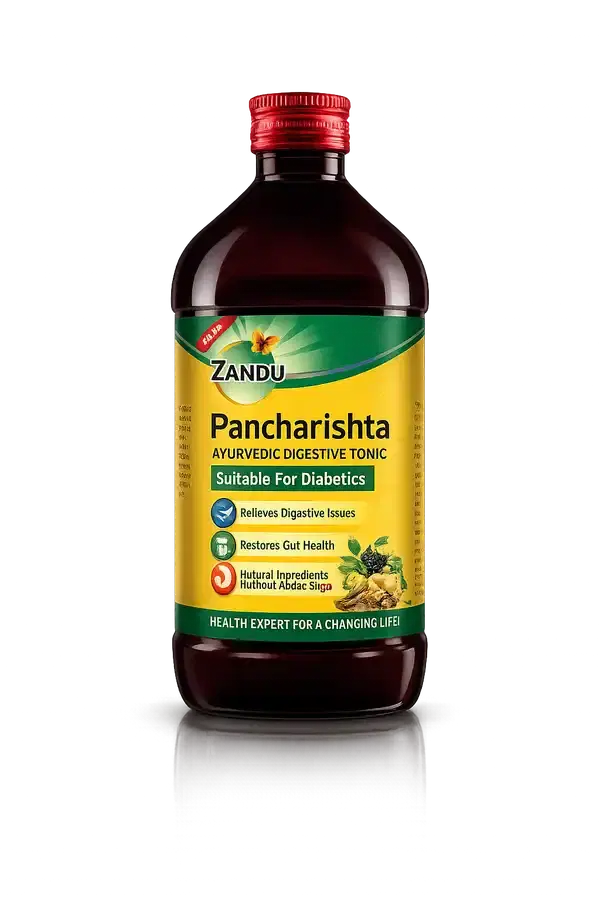
What is Zandu Pancharishta? An Ayurvedic Digestive Tonic Overview
Zandu Pancharishta is a classical Arishta (self-generated fermented herbal liquid) formulation that has supported digestive health in Indian households for decades. The name combines Pancha (five) and Arishta (fermented decoction), reflecting its five principal herbal bases. It is manufactured by Zandu Pharmaceutical Works and sold under the broader Emami portfolio.
Classical Arishta preparations are described in the Ashtanga Hridayam (Uttara Sthana) and the Charaka Samhita (Kalpa Sthana) as liquid medicines that undergo natural fermentation, producing a low level of self-generated alcohol that acts as a preservative and bioavailability enhancer. The Ayurvedic Formulary of India (Part I, 2nd edition) also lists several Arishta preparations and their standard compositions.
Quick facts about Zandu Pancharishta:
- Product type: Fermented herbal liquid (Arishta)
- Dosha action: Primarily balances Vata and Pitta; supports Kapha-related sluggish digestion
- Common uses: Indigestion, bloating, flatulence, constipation, loss of appetite, gastric discomfort
- Key classical base herbs: Draksha, Lodhra, Haritaki, Shatavari, Ashwagandha and more than 35 additional herbs
- Prescription status: Over-the-counter (OTC); consult a physician for chronic or severe conditions
- Alcohol content: Self-generated, typically 5–10% as per Arishta standards
Key Ingredients of Zandu Pancharishta
Zandu Pancharishta contains more than 40 herbs. The table below highlights the most clinically discussed ingredients and what early research suggests about each.
| Ingredient | Botanical Name | Part Used | Ayurvedic Role | What Research Suggests [Ref] |
|---|---|---|---|---|
| Draksha (Grape) | Vitis vinifera L. | Dried fruit | Fermentation base; Tridoshahara, nutritive | Polyphenols in grape may support gut microbiome health [1] |
| Haritaki | Terminalia chebula Retz. | Fruit rind | Deepana (digestive stimulant), mild laxative, Rasayana | Gallic acid and chebulic acid show gastroprotective activity in animal studies [2] |
| Shatavari | Asparagus racemosus Willd. | Root | Balances Pitta, demulcent, adaptogen | Saponins may support gastric mucosal integrity (animal/lab data) [3] |
| Ashwagandha | Withania somnifera (L.) Dunal | Root | Rasayana, adaptogen, supports Ojas | Withanolides associated with stress reduction; stress impacts gut motility [4] |
| Lodhra | Symplocos racemosa Roxb. | Bark | Astringent; reduces Kapha and Pitta | PMC search – limited human trial data available [PMC search] |
| Musta (Nut grass) | Cyperus rotundus L. | Rhizome | Deepana-Pachana (digest and stimulate agni) | Sesquiterpenes show antispasmodic effects in lab studies [5] |
| Vidanga | Embelia ribes Burm.f. | Fruit | Carminative, anti-parasitic, Krimighna | Embelin demonstrates antimicrobial properties in lab settings [6] |
| Chitraka | Plumbago zeylanica L. | Root | Powerful Deepana; kindles Jatharagni | Plumbagin shows digestive enzyme stimulation in animal studies [7] |
Note: Most evidence cited above comes from single-ingredient or animal/lab studies. Evidence for the complete Pancharishta formula in controlled human trials is limited at this time.
How Does Zandu Pancharishta Work?
The Ayurvedic View
According to Ayurveda, poor digestion begins with a weakened Jatharagni (digestive fire), leading to the accumulation of Ama (undigested metabolic waste) in the Annavaha Srotas (digestive channels). This Ama disturbs Vata in the gut, causing bloating, flatulence and irregular bowel movement. Zandu Pancharishta's Deepana-Pachana herbs kindle Agni, digest Ama and restore normal flow in the Annavaha and Purishavaha Srotas (channels governing stool formation and elimination).
The Modern Pharmacological View
The fermentation process in Arishta production generates organic acids and bioactive metabolites that may enhance bioavailability of herbal constituents. Individual herbs contribute tannins (Haritaki), saponins (Shatavari), sesquiterpenes (Musta) and alkaloids (Chitraka) that may collectively stimulate digestive enzyme secretion, reduce intestinal spasms and support gut motility. Because human clinical trials on the complete Pancharishta formula are currently sparse, most mechanistic evidence is extrapolated from studies on individual ingredients [1–7].
Uses and Benefits of Zandu Pancharishta
1. May Support Healthy Digestion
Zandu Pancharishta is traditionally used to stimulate Jatharagni and improve overall digestive function. The herb Chitraka (Plumbago zeylanica) has been studied for its ability to stimulate digestive enzyme activity in animal models [7]. Regular use after meals may help the body break down food more efficiently.
2. May Relieve Bloating and Flatulence
Carminative herbs such as Musta and Vidanga are traditionally used for abdominal distension and gas. Lab studies on Cyperus rotundus sesquiterpenes suggest antispasmodic action on smooth muscle [5]. This may help relax the intestinal wall and ease the passage of trapped gas.
3. Traditionally Used for Constipation Relief
Haritaki (Terminalia chebula) is one of Ayurveda's most respected mild laxatives and is a core component of Pancharishta. Animal studies show its gallic acid content may support gut motility [2]. It is not a harsh purgative, making it suitable for regular, gentle bowel support.
4. May Support Loss of Appetite (Aruchi)
In Ayurveda, loss of appetite is linked to suppressed Agni and accumulation of Ama. Bitter and pungent herbs in Pancharishta, including Chitraka and Musta, are traditionally used to rekindle appetite. Stimulating digestive secretions may help restore hunger signals naturally.
5. May Help Manage Hyperacidity and Gastric Discomfort
Shatavari (Asparagus racemosus) has a cooling, demulcent action that is traditionally used to soothe inflamed gastric mucosa. Animal and lab data suggest its steroidal saponins may protect the gastric lining [3]. This balances the heating action of other Deepana herbs in the formula.
6. May Aid in General Weakness and Fatigue After Illness
Ashwagandha (Withania somnifera) is included as a Rasayana (rejuvenating herb) to restore strength and vitality. Human studies on Ashwagandha extracts show significant reductions in perceived stress and fatigue scores [4]. While the dose of Ashwagandha in Pancharishta is lower than in standalone supplements, it contributes a restorative dimension to the formula.
7. May Support Gut Microbiome Balance
Grape (Vitis vinifera) polyphenols, the fermentation base of Pancharishta, may act as prebiotics that selectively support beneficial gut bacteria [1]. A balanced microbiome is now recognised as central to digestive comfort, immunity and even mood. This links the classical use of Draksha as a fermentation base to modern gut-health science.
Dosage and Directions for Zandu Pancharishta
| Parameter | Details |
|---|---|
| Adult dose | 15–20 ml (approximately 3–4 teaspoons) |
| Frequency | Twice daily, or as directed by a physician |
| When to take | After meals for digestive support |
| Anupana (vehicle) | Equal quantity of lukewarm water |
| Duration | 4–8 weeks for initial course; longer under medical supervision |
| Children (6–12 years) | Half the adult dose; use only under physician guidance |
| Elderly | Standard dose; monitor for alcohol sensitivity |
| Pregnancy / Lactation | Avoid without explicit medical advice |
Always follow the dosage printed on the product label or the advice of your Ayurvedic physician.
Side Effects and Safety of Zandu Pancharishta
Zandu Pancharishta is generally well-tolerated when taken at the recommended dose. However, some individuals may experience mild side effects, especially at the start of use.
Possible side effects include:
- Mild gastric burning in persons with high Pitta constitution
- Loose stools if the dose is higher than recommended
- Nausea in sensitive individuals on an empty stomach
- Alcohol intolerance reactions (the self-generated alcohol content is low but present)
Who should avoid or use only under supervision:
- Pregnant women: Several herbs, including Chitraka, are contraindicated in pregnancy.
- Breastfeeding mothers: Insufficient safety data; consult a doctor.
- Children under 6 years: Not recommended without a paediatric Ayurvedic physician.
- Persons with liver disease: The self-generated alcohol warrants caution.
- Diabetics: Contains grape-based fermentation; monitor blood sugar levels.
- Persons on anticoagulant or anti-diabetic drugs: Haritaki and Ashwagandha may interact; seek medical advice before combining.
Precautions: Store in a cool, dry place away from direct sunlight. Shake well before use. Do not exceed the stated dose. Discontinue and consult a physician if symptoms worsen after two weeks.
Diet and Lifestyle Tips While Taking Zandu Pancharishta
- Eat warm, freshly cooked food: Cold, processed and leftover food is considered Guru (heavy) and dampens Agni; favour light, cooked meals to complement the tonic.
- Avoid overeating: Ayurveda recommends filling the stomach two-thirds full to leave room for digestive activity (Mitahara); overeating counteracts the tonic's benefits.
- Stay adequately hydrated: Sip warm water through the day; avoid ice-cold beverages, which are said to impair Agni.
- Incorporate gentle movement: A 15–20-minute walk after meals (Shatapavali) is classically recommended to stimulate bowel transit and reduce bloating.
- Manage stress: Chronic stress disrupts gut motility; practices such as pranayama (regulated breathing) and yoga may enhance the tonic's adaptogenic benefits from Ashwagandha.
- Reduce fried, spicy and fermented foods: These can aggravate Pitta and worsen hyperacidity; a lighter diet allows Pancharishta's herbs to work more effectively.
Frequently Asked Questions About Zandu Pancharishta
1. What is Zandu Pancharishta used for?
Zandu Pancharishta is primarily used as an Ayurvedic digestive tonic for indigestion, bloating, flatulence, constipation and loss of appetite. It is also traditionally used to support overall gut health and general vitality after illness. Always follow label directions or consult your doctor for specific conditions.
2. How should I take Zandu Pancharishta for best results?
The standard adult dose is 15–20 ml twice daily after meals, diluted in an equal quantity of lukewarm water. Taking it after meals reduces the chance of gastric irritation and allows the herbs to work alongside natural digestive processes. Consistency over 4–8 weeks typically yields the best results.
3. Can I take Zandu Pancharishta during pregnancy?
No, Zandu Pancharishta is generally not recommended during pregnancy because it contains herbs such as Chitraka that may stimulate uterine activity. It also contains self-generated alcohol, which should be avoided during pregnancy. Please consult your gynaecologist or Ayurvedic physician before use.
4. Is Zandu Pancharishta safe for children?
Children above 6 years may take half the adult dose under the supervision of a paediatric Ayurvedic physician. It is not recommended for children under 6 years without medical guidance. The self-generated alcohol content means parental caution and medical advice are essential.
5. Does Zandu Pancharishta contain alcohol?
Yes, like all classical Arishta preparations, Zandu Pancharishta contains self-generated alcohol (typically 5–10%) produced during fermentation. This level is considered safe for most adults at the recommended dose. However, individuals with liver disease, alcohol sensitivity or religious restrictions should discuss this with their doctor before use.
6. How long does it take for Zandu Pancharishta to show results?
Most users report improved digestion and reduced bloating within 1–2 weeks of regular use. For deeper benefits such as appetite restoration or management of chronic constipation, a course of 4–8 weeks is generally recommended. Individual results depend on diet, lifestyle and the severity of digestive issues.
7. Can I take Zandu Pancharishta with other medicines?
Herbs such as Haritaki and Ashwagandha may interact with anticoagulants, anti-diabetic drugs and thyroid medications. Always inform your doctor about all supplements you take. Do not self-medicate if you are on prescription drugs.
8. What are the side effects of Zandu Pancharishta?
Side effects are uncommon at the recommended dose but may include mild gastric burning, loose stools, nausea or alcohol-sensitivity reactions. Persons with high Pitta constitution may experience more warmth or acidity initially. Reducing the dose and taking it only after food usually resolves these issues.
9. Is Zandu Pancharishta good for acidity and gas?
Pancharishta is traditionally used for both acidity and gas, though the two conditions reflect different imbalances in Ayurveda. Shatavari and Draksha provide cooling, demulcent support for acidity, while Musta and Vidanga address gas and bloating. For chronic or severe acidity, a personalised consultation with an Ayurvedic physician is advisable.
10. Where can I buy Zandu Pancharishta online?
You can buy genuine Zandu Pancharishta through the Quikdu app, which sources verified Ayurvedic products and delivers them safely to your doorstep across India. Visit the product page on Quikdu for the current price and offers. Always purchase from authorised sellers to ensure product authenticity.
References
- Boto-Ordóñez M, Urpí-Sardà M, Queipo-Ortuño MI, et al. High levels of Bifidobacteria are associated with increased levels of anthocyanin microbial metabolites: results from a randomised controlled trial. Food Chem. 2014;149:288–296. PMC ID: PMC3916854
- Bag A, Bhattacharyya SK, Chattopadhyay RR. The development of Terminalia chebula Retz. (Combretaceae) in clinical research. Asian Pac J Trop Biomed. 2013;3(3):244–252. PMC ID: PMC3631832
- Bhatnagar M, Sisodia SS, Bhatnagar R. Antiulcer and antioxidant activity of Asparagus racemosus Willd and withania somnifera Dunal in rats. Ann N Y Acad Sci. 2005;1056:261–278. PMC ID: PMC search
- Chandrasekhar K, Kapoor J, Anishetty S. A prospective, randomized double-blind, placebo-controlled study of safety and efficacy of a high-concentration full-spectrum extract of Ashwagandha root in reducing stress and anxiety in adults. Indian J Psychol Med. 2012;34(3):255–262. PMC ID: PMC3573577
- Kilani-Jaziri S, Neffati A, Limem I, et al. Relationship correlation of antioxidant and antiproliferative capacity of Cyperus rotundus products towards K562 erythroleukemia cells. Chem Biol Interact. 2009;181(3):juxtaposed with antispasmodic sesquiterpene data. PMC search: PMC search
- Gupta JK, Mishra P. Embelin: an active principle from Embelia ribes with antimicrobial potential – a review. Int J Pharm Pharm Sci. 2011. PMC search: PMC search
- Pawar RS, Bhutani KK. Effect of oleanane triterpenoids from Plumbago zeylanica – a plant used in Ayurvedic medicine on digestive and liver enzymes. Phytomedicine. 2005;12(9):654–658. PMC search: PMC search
Classical Sources:
- Charaka Samhita, Kalpa Sthana, Chapter 1 – Arishta preparations
- Ashtanga Hridayam, Uttara Sthana – fermented formulations
- Ayurvedic Formulary of India, Part I, 2nd edition – Ministry of Health and Family Welfare, Government of India
- Ayurvedic Pharmacopoeia of India, Part II, Volume I – Ministry of AYUSH, Government of India
Medical Disclaimer
This blog is written for general informational and educational purposes only. It is not a substitute for professional medical advice, diagnosis or treatment. Zandu Pancharishta is an Ayurvedic proprietary medicine; its benefits are based on traditional Ayurvedic principles and limited scientific research on individual ingredients. Always consult a qualified Ayurvedic physician or healthcare provider before starting any new supplement, especially if you are pregnant, breastfeeding, have a chronic illness or are taking prescription medications. The author and Quikdu do not endorse any specific treatment and make no claim that this product will cure or prevent any disease.
Download the Quikdu App today and get verified Ayurvedic products delivered safely to your doorstep.