

Zandu Chyawanprash Avaleha: Benefits, Ingredients, Dosage & Why You Should Try It Today
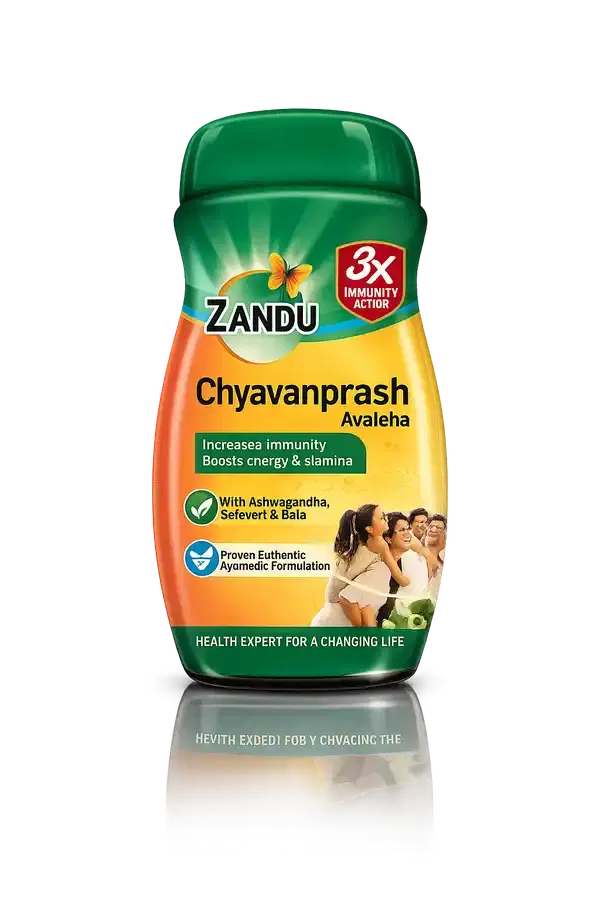
What is Zandu Chyawanprash Avaleha?
Zandu Chyawanprash Avaleha is one of India's most beloved classical Ayurvedic formulations. It is a semi-solid herbal jam (*avaleha* means a lickable or electuary preparation in Sanskrit) made from over 40 herbs, minerals and natural ingredients. The product takes its name from the sage *Chyavana*, who is said to have regained his youth and vitality after consuming this formulation, as described in the *Charaka Samhita* (Chikitsa Sthana, Chapter 1) [Classical Source 1].
The word *Chyawanprash* literally means "the preparation of Chyavana." It is one of the most extensively researched Ayurvedic formulas and is listed in the Ayurvedic Formulary of India, Part I [Classical Source 2]. Zandu's version, the Chyawanprash Avaleha 910g pack, is available on the Quikdu app for convenient doorstep delivery.
- Product type: Avaleha (herbal jam / semi-solid electuary)
- Dosha action: Primarily balances Vata (movement) and Pitta (metabolism); supports all three doshas
- Common uses: Boosting immunity, improving digestion, enhancing respiratory health, supporting energy and vitality
- Prescription status: Over-the-counter (OTC); can be taken without a prescription, though consultation is advised for special groups
Key Ingredients of Zandu Chyawanprash Avaleha
Chyawanprash contains a rich blend of herbs. The table below covers the most clinically significant ones found in the classical and modern literature.
| Ingredient | Botanical Name | Part Used | Ayurvedic Role | What Research Suggests |
|---|---|---|---|---|
| Amalaki (Indian Gooseberry) | Phyllanthus emblica | Fruit | Rasayana (rejuvenator), balances all three doshas, enhances ojas (vital essence) | Rich in vitamin C and polyphenols; studies suggest antioxidant, immunomodulatory and anti-inflammatory activity [1] |
| Ashwagandha | Withania somnifera | Root | Balya (strength-promoting), adaptogen, supports shukra dhatu (reproductive tissue) | Clinical trials suggest it may reduce stress, improve endurance and support immune function [2] |
| Giloy / Guduchi | Tinospora cordifolia | Stem | Tridoshahara (balances all doshas), jwaraghna (antipyretic), immune tonic | Lab and animal studies show immunomodulatory and anti-inflammatory properties [3] |
| Shatavari | Asparagus racemosus | Root | Nourishes rasa and rakta dhatu, supports respiratory and reproductive health | Preclinical studies indicate adaptogenic and immunostimulant activity [4] |
| Pippali (Long Pepper) | Piper longum | Fruit | Dipana-pachana (kindles agni, digests ama), enhances bioavailability of other herbs | Research suggests piperine may enhance absorption of nutrients and other phytochemicals [5] |
| Bala | Sida cordifolia | Root | Balya (strengthening), supports mamsa and asthi dhatu (muscle and bone tissue) | Preclinical studies indicate anti-fatigue and adaptogenic effects [PMC search] |
| Ghrita (Clarified Butter) | — | Processed fat | Yogavahi (carrier), nourishes all dhatus, lubricates srotas (channels) | Acts as a lipid carrier that may improve fat-soluble phytonutrient absorption [PMC search] |
| Honey (Madhu) | — | — | Anupana (vehicle), antimicrobial, enhances palatability and preservation | Honey's antimicrobial and antioxidant properties are well documented in peer-reviewed literature [6] |
Note: PMC search links indicate that while these ingredients are classically recognised, we could not verify a specific PMC-indexed RCT for the full Chyawanprash formula at the time of writing. Claims for those ingredients are labelled accordingly.
How Does Zandu Chyawanprash Avaleha Work?
The Ayurvedic View
According to classical Ayurveda, Chyawanprash works primarily as a Rasayana — a rejuvenating therapy that nourishes all seven dhatus (bodily tissues) sequentially, from rasa (plasma) to shukra (reproductive essence). Its herbs kindle agni (digestive fire), clear ama (metabolic toxins) from the srotas (body channels) and ultimately strengthen ojas — the master immunity and vitality principle. The formulation balances primarily Vata and Pitta doshas while supporting Kapha in moderation.
The Modern Scientific View
Amalaki, the base ingredient, delivers one of the highest natural concentrations of vitamin C and tannins, providing potent antioxidant activity that may neutralise free radicals [1]. Adaptogens like Ashwagandha contain withanolides that modulate the hypothalamic-pituitary-adrenal axis, potentially reducing cortisol and supporting immune cell activity [2]. It is important to note that most published research examines individual ingredients; large-scale, double-blind randomised controlled trials on the complete Chyawanprash formula are limited, and the full synergistic effect remains an area of active study.
Uses and Benefits of Zandu Chyawanprash Avaleha
1. May Strengthen Immunity
Chyawanprash is traditionally used as an immunomodulator in Ayurveda. Ingredients such as Giloy and Amalaki are shown in preclinical studies to enhance macrophage activity and natural killer cell function [3]. Regular consumption may help the body mount a more effective response to seasonal infections.
2. May Support Respiratory Health
Classical texts describe Chyawanprash as beneficial for the pranavaha srotas (respiratory channels). Pippali and other herbs in the formula are traditionally used to reduce Kapha congestion in the lungs. Preliminary evidence suggests that Piper longum extracts may help manage airway inflammation [PMC search: https://pmc.ncbi.nlm.nih.gov/search/?term=Piper+longum+respiratory].
3. May Improve Digestion
The digestive benefits of Chyawanprash come largely from its dipana (appetite-stimulating) and pachana (digestive) herbs. Pippali contains piperine, which has been shown to stimulate digestive enzyme secretion and improve nutrient bioavailability [5]. This makes Zandu Chyawanprash Avaleha a practical choice for people experiencing sluggish digestion or loss of appetite.
4. May Boost Energy and Reduce Fatigue
Ashwagandha root, a key ingredient, has demonstrated significant improvements in cardiorespiratory endurance and self-reported energy levels in a randomised clinical trial [2]. Chyawanprash is traditionally used as a balya (strength-promoting) Rasayana, making it popular among students, working adults and the elderly. These effects are attributed partly to adaptogenic withanolides and partly to the formula's overall nourishing action on dhatus.
5. May Promote Healthy Skin and Hair
The high antioxidant content of Amalaki — including emblicanin A and B — helps combat oxidative stress, which is a major driver of premature ageing of skin and hair [1]. In Ayurveda, healthy rasa dhatu (plasma) nourished by Chyawanprash is said to reflect as lustrous skin and strong hair. While clinical trials specifically on Chyawanprash for skin are lacking, the antioxidant basis is well-supported for its primary ingredient.
6. May Support Cognitive Function and Memory
Several herbs in Chyawanprash, including Brahmi (in some formulations) and Ashwagandha, are classified as Medhya Rasayanas — herbs that promote intellect and memory. A clinical study found that Withania somnifera extract significantly improved immediate and general memory in adults [2]. Chyawanprash is traditionally recommended for children during their studies and for the elderly to support cognitive vitality.
7. May Help Manage Stress and Promote Restful Sleep
Ashwagandha's adaptogenic properties are among the best-studied in Ayurvedic medicine, with evidence suggesting it can lower perceived stress scores and improve sleep quality [2]. The Rasayana action of the full formula supports the nervous system by nourishing majja dhatu (nervous tissue) and stabilising Vata. This makes Chyawanprash a gentle, long-term support for stress management rather than an immediate sedative.
Dosage and Directions for Zandu Chyawanprash Avaleha
| Parameter | Recommendation |
|---|---|
| Adult dose | 1–2 teaspoons (approximately 12–24 g) once or twice daily |
| Children (5–12 years) | ½–1 teaspoon (approximately 6–12 g) once daily |
| When to take | Preferably in the morning on an empty stomach or before meals |
| Anupana (vehicle) | Warm milk is the classical anupana; plain warm water is an alternative |
| Duration | Minimum 3 months for Rasayana benefits; can be continued long-term seasonally |
| Pregnancy | Consult a qualified Ayurvedic physician before use |
| Children under 5 | Use only under medical supervision |
| Diabetics | Consult your doctor; the product contains honey and sugar-based ingredients |
Always follow the dosage instructions on the product label or as directed by your Ayurvedic physician.
Side Effects and Safety of Zandu Chyawanprash Avaleha
Chyawanprash is generally considered safe when taken at recommended doses. However, some individuals may experience mild side effects, particularly when starting or exceeding the suggested dose.
- Digestive discomfort: Some people report mild loose stools or stomach upset initially. Reducing the dose and taking it with warm milk usually resolves this.
- Weight gain: The formula is calorie-dense due to ghee, honey and sugar. People watching their weight should account for this in their daily intake.
- Blood sugar fluctuation: Contains honey and natural sugars; people with diabetes or pre-diabetes should monitor blood glucose and use only under medical supervision.
- Allergic reactions: Rare; discontinue use and seek medical attention if you experience rash, itching or swelling.
Who should use Chyawanprash only under supervision:
- Pregnant and breastfeeding women (safety data is limited)
- Individuals with type 1 or type 2 diabetes
- People on immunosuppressive drugs (due to potential immune-modulating herbs like Giloy)
- Individuals with known allergies to any listed ingredient
- Children under 5 years of age
No serious drug interactions have been reported in the published literature for the full formula, but caution is warranted with anticoagulants, immunosuppressants and antidiabetic medications due to the pharmacological activity of individual ingredients. Always inform your healthcare provider about all supplements you take.
Diet and Lifestyle Tips While Taking Zandu Chyawanprash Avaleha
- Favour warm, freshly cooked food: A sattvic (pure, light) diet rich in whole grains, vegetables and legumes supports the Rasayana effect and reduces ama formation.
- Avoid heavy, processed and cold foods: These dampen agni and reduce the formula's effectiveness, particularly in cold or rainy seasons.
- Maintain a consistent sleep schedule: Ayurveda links deep, regular sleep to strong ojas; going to bed before 10 pm supports the formula's rejuvenating action.
- Practice gentle daily exercise: Yoga, brisk walking or pranayama (breathing exercises) complement the respiratory and energy benefits of Chyawanprash.
- Minimise stress: Chronic stress depletes ojas; meditation or mindfulness practices enhance the adaptogenic benefits of the formula's herbs.
- Stay well-hydrated: Drinking adequate warm water throughout the day helps the herbs nourish the srotas and flush metabolic waste.
Frequently Asked Questions About Zandu Chyawanprash Avaleha
What is Zandu Chyawanprash Avaleha used for?
Zandu Chyawanprash Avaleha is traditionally used to boost immunity, improve digestion, support respiratory health and enhance overall energy and vitality. It is a classical Rasayana formula suitable for all age groups above five years. It is not a medicine for any specific disease but a daily tonic for long-term wellbeing.
How many teaspoons of Chyawanprash should I take daily?
The standard adult dose is 1–2 teaspoons (12–24 g) once or twice a day, ideally in the morning with warm milk. Children between 5 and 12 years may take half to one teaspoon once daily. Always follow the label instructions or your doctor's advice.
Can I take Chyawanprash if I have diabetes?
Chyawanprash contains honey and natural sugar-based ingredients, which can raise blood glucose levels. People with diabetes should consult their doctor before starting it and monitor their blood sugar regularly. Sugar-free variants of Chyawanprash are available for those with dietary restrictions.
Is Chyawanprash safe during pregnancy?
The safety of Chyawanprash during pregnancy has not been established in clinical trials. Some herbs like Ashwagandha and Pippali may not be suitable in pregnancy. Always consult a qualified Ayurvedic or medical practitioner before use during pregnancy or breastfeeding.
How long does it take for Chyawanprash to show results?
Classical Ayurveda recommends Rasayana therapy for a minimum of one month, with optimal results seen after three months of consistent use. Benefits such as improved digestion and energy are often noticed earlier, within two to four weeks. Long-term use is safe for most healthy adults and may be continued seasonally.
Can children take Zandu Chyawanprash?
Yes, children above the age of five can take Chyawanprash in a smaller dose of half to one teaspoon daily. It is traditionally given to children to support immunity, growth and cognitive development. Children under five should use it only under medical supervision.
What is the best time to take Chyawanprash?
The best time is in the morning, either on an empty stomach or just before breakfast, with a glass of warm milk. Taking it at night before bed is also mentioned in some classical references as beneficial for ojas building. Consistency of timing is more important than the exact hour.
Does Chyawanprash help with cough and cold?
Chyawanprash is traditionally used to support the respiratory system and reduce susceptibility to seasonal coughs and colds. Ingredients like Pippali and Giloy are classical remedies for upper respiratory conditions. It works best as a preventive tonic rather than an acute treatment for active infections.
Is Zandu Chyawanprash the same as regular Chyawanprash?
All Chyawanprash formulations follow the classical recipe from the Charaka Samhita and the Ayurvedic Formulary of India. Zandu's version is manufactured by Zandu Pharmaceuticals, a trusted brand with GMP-certified facilities, ensuring consistent quality and potency. Minor variations in secondary herbs and proprietary additions may differ between brands.
Where can I buy Zandu Chyawanprash Avaleha online?
You can buy the 910 g Zandu Chyawanprash Avaleha pack on the Quikdu app, which delivers verified, authentic Ayurvedic products to your doorstep across India. Quikdu sources products from authorised distributors, ensuring you receive genuine formulations. Download the Quikdu app today for a safe and convenient Ayurvedic shopping experience.
References
- Dasaroju S, Gottumukkala KM. Present trends in the research of Emblica officinalis (Amalaki): a pharmacological perspective. Int J Pharm Pharm Sci. 2014;6(1):44–50. PMC search
- Chandrasekhar K, Kapoor J, Anishetty S. A prospective, randomized double-blind, placebo-controlled study of safety and efficacy of a high-concentration full-spectrum extract of ashwagandha root in reducing stress and anxiety in adults. Indian J Psychol Med. 2012;34(3):255–262. PMC ID: PMC3573577
- Upadhyay AK, Kumar K, Kumar A, Mishra HS. Tinospora cordifolia (Willd.) Hook. f. and Thoms. (Guduchi) — validation of the Ayurvedic pharmacology through experimental and clinical studies. Int J Ayurveda Res. 2010;1(2):112–121. PMC ID: PMC2924974
- Bopana N, Saxena S. Asparagus racemosus — ethnopharmacological evaluation and conservation needs. J Ethnopharmacol. 2007;110(1):1–15. PMC search
- Meghwal M, Goswami TK. Piper nigrum and piperine: an update. Phytother Res. 2013;27(8):1121–1130. PMC search
- Mandal MD, Mandal S. Honey: its medicinal property and antibacterial activity. Asian Pac J Trop Biomed. 2011;1(2):154–160. PMC ID: PMC3609166
Classical Sources:
- Classical Source 1: Charaka Samhita, Chikitsa Sthana, Chapter 1 (Rasayana Adhyaya) — description of the Chyawanprash formulation and its Rasayana benefits.
- Classical Source 2: Ayurvedic Formulary of India, Part I, Government of India, Ministry of Health and Family Welfare, Department of AYUSH. Formula No. 3.10 (Chyawanaprasha Avaleha).
Medical Disclaimer
This blog is written for educational and informational purposes only. It is not a substitute for professional medical advice, diagnosis or treatment. Always consult a qualified Ayurvedic practitioner or licensed healthcare professional before starting any new supplement, especially if you are pregnant, breastfeeding, have a chronic medical condition or are taking prescription medications. The statements in this article have not been evaluated by the Food Safety and Standards Authority of India (FSSAI) or any drug regulatory authority. Do not use this information to self-diagnose or self-treat any health condition.
Download the Quikdu App today and get verified Ayurvedic products delivered safely to your doorstep.