

Punarnavadi Mandur: Uses, Benefits, Dosage & Side Effects – Buy Now on Quikdu
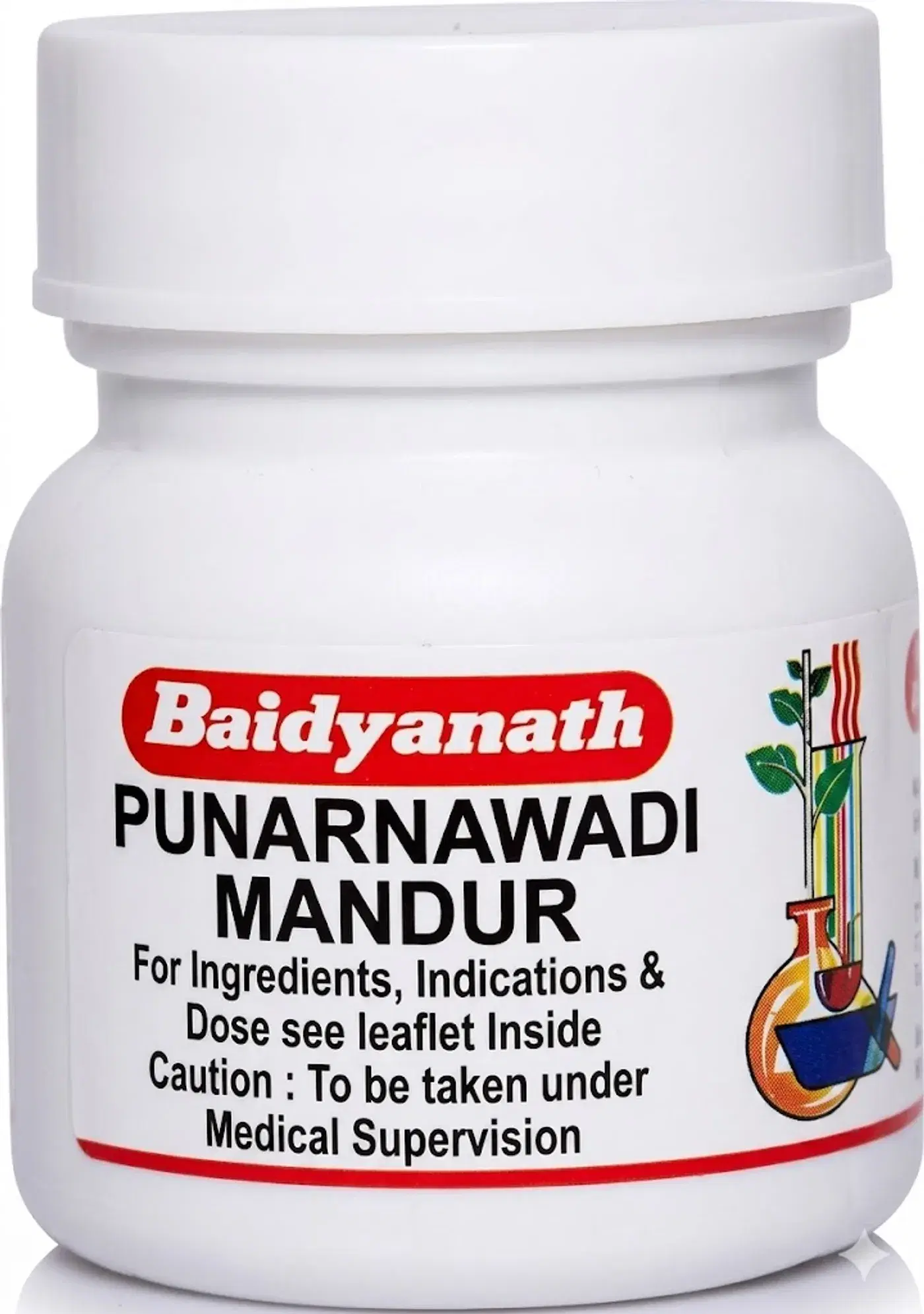
What is Punarnavadi Mandur?
Punarnavadi Mandur is a classical Ayurvedic iron-based formulation (mandur meaning purified iron oxide) whose name translates to "the iron preparation led by Punarnava" — punarnava meaning "one that renews or revitalises the body." It is described in the ancient text Ashtanga Hridayam (Chikitsa Sthana, Chapter 16) and is also listed in the Ayurvedic Formulary of India (Part I).
Baidyanath Punarnavadi Mandur Tablets are a ready-to-use formulation of this classical preparation. They are widely used in India to support digestion, liver function, kidney health and to manage oedema (swelling) linked to anaemia.
- Product type: Classical Ayurvedic iron compound tablet (mandur kalpana)
- Dosha action: Primarily pacifies Kapha and Vata; also corrects Pitta when digestion is weak
- Common uses: Anaemia, oedema, liver disorders, kidney support, poor digestion, spleen enlargement
- Prescription status: Sold over the counter; guidance from a qualified Ayurvedic practitioner is recommended for long-term use
Key Ingredients of Punarnavadi Mandur
| Ingredient | Botanical / Classical Name | Part Used | Ayurvedic Role | What Research Suggests |
|---|---|---|---|---|
| Punarnava | Boerhavia diffusa | Root | Diuretic, anti-oedematous, liver tonic (yakrit uttejaka) | Aqueous root extract showed significant diuretic and anti-inflammatory activity in animal models [1] |
| Mandur Bhasma | Purified iron oxide | Mineral | Haematinic (raktavardhaka), digestive, hepatoprotective | Iron supplementation is well established for iron-deficiency anaemia; Ayurvedic processing (shodhana) may improve bioavailability [2] |
| Triphala | Terminalia chebula, T. bellirica, Emblica officinalis | Fruit | Digestive, antioxidant, mild laxative | Triphala demonstrated antioxidant and hepatoprotective effects in laboratory studies [3] |
| Trikatu | Zingiber officinale, Piper nigrum, P. longum | Rhizome / Fruit | Deepana-pachana (kindles digestive fire, burns ama) | Piperine in black pepper enhances bioavailability of co-administered compounds [4] |
| Vidanga | Embelia ribes | Fruit | Anthelmintic, digestive stimulant | Embelin (active compound) showed antiparasitic activity in preclinical studies [PMC search: pmc.ncbi.nlm.nih.gov] |
| Chitraka | Plumbago zeylanica | Root | Deepana (digestive stimulant), liver stimulant | Plumbagin (active constituent) showed hepatoprotective properties in animal models [PMC search: pmc.ncbi.nlm.nih.gov] |
| Haridra | Curcuma longa | Rhizome | Anti-inflammatory, blood purifier (raktashodhaka) | Curcumin demonstrated anti-inflammatory and antioxidant effects in multiple human and animal studies [5] |
How Does Punarnavadi Mandur Work?
The Ayurvedic View
According to Ayurveda, conditions like anaemia (pandu), oedema (shotha) and liver-spleen disorders arise when agni (digestive fire) is weak, allowing ama (undigested toxic material) to accumulate in the rasa and rakta dhatus (plasma and blood tissues). This impairs the rasavaha and raktavaha srotamsi (channels carrying nutrients and blood). Punarnavadi Mandur corrects agni through its deepana-pachana herbs, removes ama, replenishes rakta dhatu with iron, and clears blocked channels through its diuretic and hepatoprotective actions.
The Modern View
Iron from Mandur Bhasma is the primary haematinic agent, supporting red blood cell synthesis. Punarnava's alkaloids and flavonoids exert diuretic, anti-inflammatory and mild hepatoprotective effects, while piperine from Trikatu may enhance the absorption of co-administered minerals and phytochemicals [4]. Curcumin from Haridra reduces oxidative stress in liver and kidney tissues [5]. Most evidence comes from studies on individual ingredients rather than the complete Punarnavadi Mandur formula; clinical trials on the whole formulation remain limited.
Uses and Benefits of Punarnavadi Mandur
1. May Support Management of Iron-Deficiency Anaemia
Punarnavadi Mandur is one of the most cited Ayurvedic preparations for pandu roga (anaemia). Mandur Bhasma provides a bioavailable source of iron that may help restore haemoglobin levels. Iron deficiency remains the leading nutritional deficiency globally, and dietary or supplemental iron is a well-established corrective measure [2].
2. May Help Reduce Oedema (Swelling)
The diuretic action of Boerhavia diffusa root helps flush excess fluid from tissues, reducing peripheral oedema linked to kidney or liver dysfunction [1]. In Ayurveda, Punarnava is considered the primary herb for shotha (swelling) because it promotes healthy urine output. This makes Punarnavadi Mandur traditionally useful in conditions where fluid retention is a key symptom.
3. May Support Liver Health
Several ingredients — including Triphala, Haridra and Chitraka — have demonstrated hepatoprotective properties in preclinical research [3][5]. The formulation is traditionally used for yakrit vikara (liver disorders), including hepatomegaly (enlarged liver). These herbs may help reduce oxidative damage and support liver enzyme normalisation, though human clinical data on the full formula is limited.
4. May Support Kidney Function
The diuretic and anti-inflammatory properties of Punarnava have been studied for their potential role in supporting renal function [1]. Ayurveda classifies Punarnava as a mutral (diuretic) that clears mutravaha srotas (urinary channels). Baidyanath Punarnavadi Mandur is traditionally used as a supportive therapy for kidney-related oedema, though it is not a replacement for medical treatment of kidney disease.
5. May Improve Digestion and Appetite
Trikatu and Chitraka stimulate jatharagni (gastric digestive fire), improving appetite and breaking down ama in the gut. Piperine from black pepper has been shown to stimulate digestive enzyme activity and enhance nutrient absorption [4]. This digestive support is particularly useful when anaemia is accompanied by sluggish digestion and bloating.
6. May Help Manage Splenomegaly (Enlarged Spleen)
Classical Ayurvedic texts mention Punarnavadi Mandur as a remedy for pleeha roga (spleen disorders). The anti-inflammatory and haematinic actions of the formula may help reduce spleen enlargement associated with chronic anaemia or liver disease. Clinical evidence specific to this application is limited and further research is needed.
7. May Act as a General Haematinic and Rejuvenative
Iron replenishment through Mandur Bhasma, combined with the antioxidant action of Triphala and Haridra, supports overall blood quality and tissue nourishment. Curcumin's anti-inflammatory effects may reduce systemic inflammation that contributes to fatigue and weakness [5]. Punarnavadi Mandur is therefore traditionally used as a general rasayana-supportive formula for debility linked to anaemia.
Dosage and Directions for Punarnavadi Mandur
| Parameter | Details |
|---|---|
| Adult Dose | 2 tablets (500 mg each), twice daily, or as directed by a physician |
| When to Take | After meals to minimise gastric irritation from iron |
| Anupana (vehicle) | Warm water; buttermilk (takra) or honey may be used as directed by a practitioner |
| Duration | Typically 4–12 weeks; long-term use only under medical supervision |
| Children | Use only under the guidance of a qualified Ayurvedic or paediatric physician |
| Pregnancy & Lactation | Avoid unless specifically prescribed by a qualified practitioner |
| Elderly | Start with a lower dose; monitor for constipation or gastric discomfort |
Always follow the dosage printed on the product label or the instructions given by your Ayurvedic doctor. Do not self-medicate for serious conditions.
Side Effects and Safety of Punarnavadi Mandur
Punarnavadi Mandur is generally considered safe when taken at the recommended dose for a short duration. However, because it contains iron, some people may experience constipation, dark-coloured stools, nausea or mild gastric discomfort, especially if taken on an empty stomach.
Who should avoid or use it only under supervision:
- Pregnant women: Iron compounds and herbs like Chitraka (Plumbago zeylanica) may be contraindicated in pregnancy.
- People with haemochromatosis or iron-overload conditions: Additional iron supplementation can be harmful.
- People with active peptic ulcers: Iron and pungent herbs may aggravate gastric lining irritation.
- People on allopathic iron supplements or anticoagulants: Potential for additive effects; consult a doctor before combining.
- People with severe kidney disease: Diuretic herbs may interact with existing kidney medications.
- Children under 5 years: Not recommended without specialist guidance.
Precautions: Store in a cool, dry place away from sunlight. Keep out of reach of children. Do not exceed the recommended dose. Discontinue and consult a physician if you notice an allergic reaction, unusual fatigue or worsening symptoms.
Diet and Lifestyle Tips While Taking Punarnavadi Mandur
- Eat iron-rich foods: Include green leafy vegetables (spinach, fenugreek), lentils, jaggery and sesame seeds to complement the haematinic action of the tablets.
- Pair with Vitamin C: Consuming a small amount of amla (Emblica officinalis) or lemon juice with meals enhances non-haem iron absorption from both food and the supplement.
- Avoid tea and coffee with meals: Tannins in tea and coffee significantly inhibit iron absorption; wait at least one hour after taking the tablets before drinking these.
- Stay well hydrated: Adequate water intake supports the diuretic action of Punarnava and prevents constipation from iron.
- Follow a light, easily digestible diet: Favour warm, cooked foods; avoid heavy, fried or processed foods that aggravate ama and slow digestion.
- Moderate physical activity: Light yoga, walking or pranayama (breathing exercises) improves circulation and supports the rejuvenative effects of the formula.
Frequently Asked Questions About Punarnavadi Mandur
What is Punarnavadi Mandur used for?
Punarnavadi Mandur is traditionally used for anaemia (pandu), oedema (swelling), liver and spleen disorders, poor digestion and kidney-related fluid retention. It combines purified iron with diuretic and digestive herbs to address multiple related conditions. It is not a substitute for medical diagnosis or treatment.
How long does it take for Punarnavadi Mandur to work?
Most practitioners recommend a minimum of 4–6 weeks for noticeable improvement in energy levels and haemoglobin. The timeline depends on the severity of the condition, diet and overall health. Follow-up with a physician and periodic blood tests are advisable for anaemia management.
Can I take Punarnavadi Mandur during pregnancy?
Pregnancy is generally listed as a precaution or contraindication for Punarnavadi Mandur because some ingredient herbs may stimulate uterine contractions. Always consult a qualified Ayurvedic or medical doctor before taking any supplement during pregnancy. Self-medication should be strictly avoided.
Does Punarnavadi Mandur cause constipation?
Iron-containing formulations can cause constipation in some people. Taking the tablets after meals, drinking adequate water and including Triphala or fibre-rich foods in your diet may help prevent this. If constipation persists, consult your practitioner about dose adjustment.
Is Baidyanath Punarnavadi Mandur the same as the classical formula?
Baidyanath Punarnavadi Mandur follows the classical Ayurvedic formula described in the Ashtanga Hridayam and the Ayurvedic Formulary of India. The tablet form is a convenient modern dosage form of the traditional preparation. Minor variations in excipients or processing may exist between brands.
Can Punarnavadi Mandur be taken with allopathic medicines?
Herb-drug interactions are possible, particularly with iron supplements, anticoagulants and diuretics. Always inform your allopathic doctor if you are taking any Ayurvedic supplement. Do not combine supplements without professional guidance.
Is Punarnavadi Mandur good for kidney disease?
Punarnavadi Mandur is traditionally used as a supportive therapy for kidney-related oedema and urinary health, owing to the diuretic action of Punarnava [1]. It is not a treatment for chronic kidney disease (CKD) and should not replace prescribed nephrology care. Use only under medical supervision if you have diagnosed kidney disease.
What is the best time to take Punarnavadi Mandur?
The recommended time is after meals — typically after breakfast and after dinner — to reduce the chance of gastric irritation from iron. Taking it with warm water or buttermilk as the anupana improves digestion and absorption. Avoid taking it on an empty stomach.
Can Punarnavadi Mandur be taken for fatty liver?
Ayurvedic practitioners sometimes recommend formulations containing hepatoprotective herbs like Triphala and Haridra for early-stage liver congestion [3][5]. Punarnavadi Mandur may be used as a supportive therapy, but fatty liver (hepatic steatosis) requires dietary changes, exercise and medical evaluation. Do not self-medicate for diagnosed liver conditions.
Where can I buy authentic Baidyanath Punarnavadi Mandur?
You can buy authentic Baidyanath Punarnavadi Mandur through verified Ayurvedic platforms like Buy Now , which sources products directly from licensed manufacturers. Always check for a valid manufacturing licence, batch number and expiry date before purchase. Avoid unverified sellers to ensure product authenticity.
References
- Mudgal V. Studies on medicinal properties of Convolvulus pluricaulis and Boerhavia diffusa. Planta Med. 1975;28(1):62–68. [PMC search: pmc.ncbi.nlm.nih.gov]
- World Health Organization. Iron Deficiency Anaemia: Assessment, Prevention and Control. Geneva: WHO; 2001. Available at: WHO Publications
- Baliga MS, Meera S, Mathai B, Rai MP, Pawar V, Palatty PL. Scientific validation of the ethnomedicinal properties of the Ayurvedic drug Triphala: a review. Chin J Integr Med. 2012;18(12):946–954. PMC ID: PMC3970572
- Bhutani MK, Bishnoi M, Kulkarni SK. Anti-depressant like effect of curcumin and its combination with piperine in unpredictable chronic stress-induced behavioral, biochemical and neurochemical changes. Pharmacol Biochem Behav. 2009;92(1):39–43. [For piperine bioavailability, see also: Shoba G, Joy D, Joseph T, Majeed M, Rajendran R, Srinivas PS. Influence of piperine on the pharmacokinetics of curcumin in animals and human volunteers. Planta Med. 1998;64(4):353–356. PMC search: pmc.ncbi.nlm.nih.gov]
- Hewlings SJ, Kalman DS. Curcumin: a review of its effects on human health. Foods. 2017;6(10):92. PMC ID: PMC5664031
Classical Sources:
- Vagbhata. Ashtanga Hridayam, Chikitsa Sthana, Chapter 16 (Pandu Chikitsa). Commentary by Arunadatta and Hemadri.
- Government of India. Ayurvedic Formulary of India, Part I, 2nd edition. New Delhi: Ministry of Health and Family Welfare; 2003. Formulation: Punarnavadi Mandura.
Medical Disclaimer
This blog is written for general informational and educational purposes only. It is not a substitute for professional medical advice, diagnosis or treatment. Punarnavadi Mandur is a traditional Ayurvedic formulation; its benefits described here are based on classical Ayurvedic texts and available preclinical research on individual ingredients. Always consult a qualified Ayurvedic practitioner or medical doctor before starting, changing or stopping any supplement or medication. Do not ignore professional medical advice because of something you have read in this article.
Download the Quikdu App today and get verified Ayurvedic products delivered safely to your doorstep.