

Kanchnar Guggul: Uses, Benefits, Dosage & Side Effects – Buy Now on Quikdu
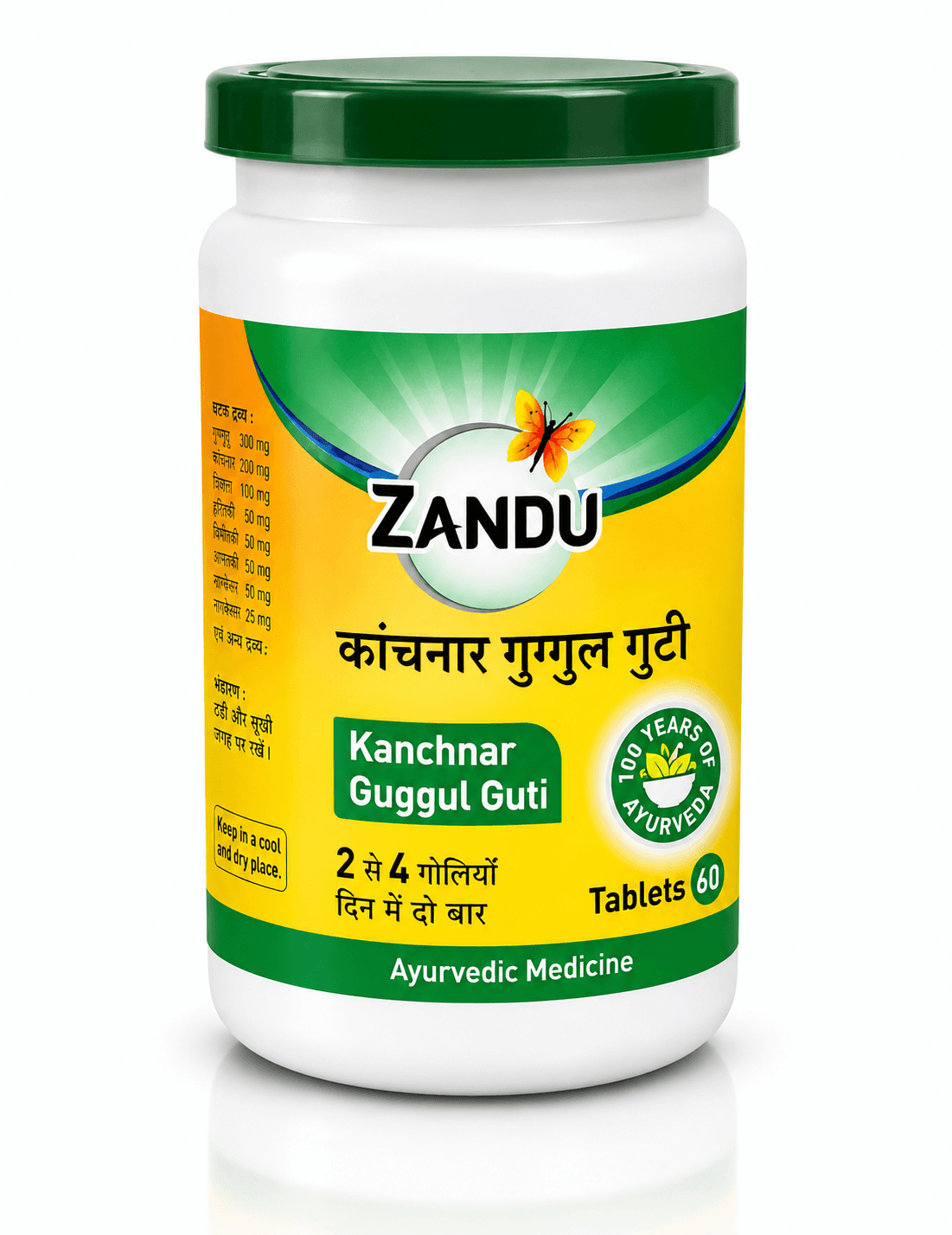
What is Kanchnar Guggul?
Kanchnar Guggul is a classical Ayurvedic tablet formulation that has been used for centuries to support healthy glandular function and lymphatic balance. The name combines two Sanskrit words: Kanchnar (the bark of Bauhinia variegata, meaning "beautiful creeper") and Guggul (the resin of Commiphora mukul, meaning "one that protects against disease"). Together they form one of Ayurveda's most recognised preparations for conditions involving abnormal tissue growth and glandular swelling.
The formula is classically documented in Sharangdhar Samhita (Madhyama Khanda, Chapter 7) and is also listed in the Ayurvedic Formulary of India (Part I). It belongs to the Guggul Kalpana category of formulations, meaning it uses purified resin as its primary carrier.
- Product type: Classical Ayurvedic tablet (OTC)
- Dosha action: Primarily balances Kapha and Vata doshas (the biological energies governing structure and movement)
- Common uses: Thyroid glandular health, lymph node swelling, skin conditions, PCOS support, lipid management
- Prescription status: Available over the counter; consult a qualified Ayurvedic physician for chronic conditions
Key Ingredients of Kanchnar Guggul
| Ingredient | Botanical / Source Name | Part Used | Ayurvedic Role | What Research Suggests |
|---|---|---|---|---|
| Kanchnar | Bauhinia variegata | Bark | Reduces Kapha, astringent, supports Medovaha srotas (fat-carrying channels) | Bark extracts showed anti-inflammatory and thyroid-modulating activity in animal studies [1] |
| Guggul (purified) | Commiphora mukul | Oleo-gum resin | Scrapes Ama (metabolic toxins), kindles Agni (digestive fire), clears Srotas | Guggulsterones in Guggul may support healthy lipid levels and thyroid function [2] |
| Haritaki | Terminalia chebula | Fruit | Tridoshic (balances all three doshas), mild laxative, rejuvenative | Demonstrated antioxidant and anti-inflammatory effects in cell-based studies [3] |
| Bibhitaki | Terminalia bellirica | Fruit | Reduces Kapha, supports respiratory and lymphatic health | Shown antioxidant activity in vitro; part of Triphala research [3] |
| Amalaki | Emblica officinalis | Fruit | Balances all doshas, rich in Vitamin C, tissue nourishing (Rasayana) | High ascorbic acid content; antioxidant properties well documented [3] |
| Varuna | Crataeva nurvala | Bark | Reduces Kapha, diuretic, supports urinary and lymphatic channels | Anti-inflammatory properties reported in animal studies [4] |
| Ginger (Shunthi) | Zingiber officinale | Rhizome | Deepana (kindles digestive fire), anti-Ama, reduces Vata and Kapha | Gingerols and shogaols show anti-inflammatory activity in human studies [5] |
| Black Pepper (Maricha) | Piper nigrum | Fruit | Enhances bioavailability of other herbs, kindles Agni | Piperine shown to enhance drug absorption in clinical studies [6] |
| Long Pepper (Pippali) | Piper longum | Fruit | Deepana, Anupana (carrier), enhances bioavailability | Supports enhanced absorption alongside piperine [6] |
| Cardamom (Ela) | Elettaria cardamomum | Seed | Corrects taste, carminative, reduces Vata | Antioxidant and anti-inflammatory activity reported in PMC search [7] |
| Cinnamon (Twak) | Cinnamomum zeylanicum | Bark | Deepana, carminative, anti-Kapha | Antioxidant and anti-glycaemic activity reported in human studies [7] |
How Does Kanchnar Guggul Work?
Ayurvedic View
According to classical Ayurvedic texts, Granthi (glandular swellings) and Apachi (lymph node enlargements) arise primarily from an imbalance of Kapha dosha and impaired Agni (digestive fire). This leads to accumulation of Ama (unprocessed metabolic waste) in Medovaha srotas (fat-carrying channels) and Lasika vaha srotas (lymphatic channels). Kanchnar Guggul is considered Lekhana (scraping) and Kaphahara (Kapha-reducing) in action, helping to dissolve these accumulations, restore proper flow through channels, and support healthy Meda dhatu (adipose and related tissues) metabolism.
Modern Scientific View
Active compounds in Commiphora mukul, particularly guggulsterones (E and Z forms), have been studied for their ability to modulate thyroid hormone synthesis and support healthy lipid levels [2]. Bauhinia variegata bark contains flavonoids, tannins and alkaloids that may reduce inflammation and support glandular tissue in animal models [1]. It is important to note that most studies examine individual ingredients in isolation; evidence for the complete multi-herb formula is limited to traditional use and preliminary animal research. Consumers should not interpret ingredient-level data as proof of clinical efficacy for the whole product.
Uses and Benefits of Kanchnar Guggul
1. May Support Thyroid Glandular Health
Kanchnar Guggul is one of the most widely recommended Ayurvedic formulas for thyroid glandular health, particularly for conditions involving goitre or sluggish thyroid function. Guggulsterones found in purified Guggul resin have been shown in animal studies to influence thyroid hormone production and iodine uptake [2]. This makes Kanchnar Guggul a popular adjunct support, used alongside conventional management under physician guidance.
2. Traditionally Used for Lymph Node Swellings
Classical texts describe Kanchnar Guggul as the foremost remedy for Apachi, the Ayurvedic term for enlarged or inflamed lymph nodes. The Lekhana (scraping) action of Guggul combined with the astringent properties of Kanchnar bark is believed to reduce abnormal tissue accumulation. This traditional use is widely cited by Ayurvedic practitioners across India for benign lymph node enlargements.
3. May Help Manage Skin Conditions
Kanchnar Guggul's Kapha and Ama-reducing action may support clearer skin by addressing the root metabolic cause of conditions like cysts, lipomas and chronic skin eruptions. Antioxidant compounds in Triphala (Haritaki, Bibhitaki and Amalaki) may reduce oxidative stress that contributes to skin inflammation [3]. Clinical outcomes vary and users should consult a dermatologist or Ayurvedic physician before use.
4. Traditionally Used to Support PCOS Management
Polycystic Ovarian Syndrome (PCOS) involves hormonal imbalance, which Ayurveda associates with Artavavaha srotas (female reproductive channel) disruption and excess Kapha. Kanchnar Guggul is frequently included in Ayurvedic PCOS protocols to reduce cyst formation and support hormonal balance. Evidence for this specific use in humans is currently limited; further clinical research is needed.
5. May Support Healthy Lipid Levels
Guggulsterones from Commiphora mukul have been studied for their potential to support healthy cholesterol and triglyceride levels [2]. A review published on PMC indicates that Guggul preparations may modulate lipid metabolism through bile acid pathways [2]. This benefit is most relevant when combined with appropriate diet and lifestyle changes.
6. May Aid in Managing Lipomas and Fibroids
Lipomas (benign fatty tissue growths) and uterine fibroids are classified under Mamsaja Granthi or Medaja Granthi in Ayurveda, meaning growths arising from muscle or fat tissue. Kanchnar Guggul's Lekhana (scraping) and Vikasini (tissue-opening) actions are traditionally used to reduce such formations. This use is based on classical textual references and clinical experience; controlled human trials are limited.
7. Traditionally Used as an Anti-inflammatory Support
Ginger (Shunthi) and the guggulsterones in the formula are among the most studied natural anti-inflammatory agents [5]. Regular use of Kanchnar Guggul is traditionally recommended for joint and soft-tissue inflammation associated with Kapha and Ama accumulation. Supporting evidence comes primarily from single-ingredient studies; whole-formula clinical trials are still needed.
Dosage and Directions for Kanchnar Guggul
| Parameter | Details |
|---|---|
| Adult dose | 2 tablets (typically 500 mg each), twice or thrice daily |
| When to take | After meals, or as directed by an Ayurvedic physician |
| Anupana (carrier) | Warm water or warm milk; some practitioners recommend honey for Kapha conditions |
| Duration | Minimum 3 months for chronic conditions; continue as advised by physician |
| Children | Not recommended without medical supervision |
| Elderly | Use under supervision; start with lower dose and monitor digestion |
| Pregnancy / Lactation | Avoid during pregnancy; consult physician before use while breastfeeding |
Always follow the dosage instructions on the product label or the advice of your qualified Ayurvedic doctor. Do not self-medicate for serious glandular or thyroid conditions.
Side Effects and Safety of Kanchnar Guggul
Kanchnar Guggul is generally considered safe when taken at recommended doses under proper guidance. However, some individuals may experience mild side effects, especially at the start of therapy. Reported effects include loose stools or mild digestive discomfort, skin rash (rare), headache, or nausea in sensitive individuals.
Who should avoid or use with caution:
- Pregnancy: Guggul has traditionally been classified as Garbhaposhaka (nourishing) but some classical texts caution against its use in high doses during pregnancy. Avoid unless specifically directed by a physician.
- Hyperthyroidism: Since Kanchnar Guggul may stimulate thyroid activity, use with caution in hyperthyroid conditions. Always inform your endocrinologist.
- On blood thinners or thyroid medication: Guggul may interact with warfarin and thyroid hormone drugs. Inform your doctor before combining.
- Liver disorders: Guggul-based products should be used cautiously in active liver disease; consult a physician.
- Children under 12: Avoid use without medical supervision.
If you notice any unusual symptoms, stop use and consult a healthcare provider immediately.
Diet and Lifestyle Tips While Taking Kanchnar Guggul
- Favour a Kapha-reducing diet: Include warm, light, easily digestible foods. Reduce cold, heavy, oily and sweet foods that aggravate Kapha and increase Ama.
- Stay hydrated with warm water: Drinking warm water throughout the day helps flush toxins and supports the Lekhana (scraping) action of the formula.
- Regular physical activity: Daily brisk walking or yoga for at least 30 minutes supports lymphatic flow and metabolism, complementing the formula's action.
- Limit refined sugar and processed foods: These contribute to Ama accumulation and may worsen glandular and metabolic conditions.
- Practice stress management: Chronic stress impairs thyroid and immune function. Meditation, Pranayama (breathing exercises) and adequate sleep are strongly recommended.
- Avoid incompatible foods: Cold drinks, excessive dairy and heavy legumes are classically considered to increase Kapha; moderate or avoid these during the course of treatment.
Frequently Asked Questions About Kanchnar Guggul
What is Kanchnar Guggul used for?
Kanchnar Guggul is traditionally used for thyroid glandular health, lymph node swelling, PCOS, lipomas, skin cysts and healthy lipid management. It is one of Ayurveda's primary formulas for conditions involving abnormal tissue growth and Kapha-type metabolic imbalances. Always use under the guidance of a qualified Ayurvedic practitioner for chronic conditions.
Can Kanchnar Guggul be taken for thyroid problems?
Yes, Kanchnar Guggul is one of the most widely recommended Ayurvedic formulas for thyroid glandular health, particularly for conditions like goitre and hypothyroid support. Guggulsterones may influence thyroid hormone activity in animal models [2]. However, it should never replace prescribed thyroid medication; always consult your doctor before combining it with thyroid drugs.
What is the correct dosage of Kanchnar Guggul?
The standard adult dosage is 2 tablets (500 mg each) twice or thrice daily after meals with warm water. Duration of use is typically a minimum of three months for chronic conditions, as advised by a physician. Always follow the label instructions for the specific brand you are using.
Does Kanchnar Guggul have any side effects?
At recommended doses, Kanchnar Guggul is generally well tolerated. Some people may experience mild digestive upset, loose stools or rare skin reactions, especially early in treatment. Individuals on thyroid medication or blood thinners should consult their doctor before use due to possible interactions.
Can Kanchnar Guggul help with PCOS?
Kanchnar Guggul is frequently included in Ayurvedic PCOS protocols due to its Kapha-reducing and glandular-support properties. It is traditionally believed to help reduce ovarian cysts and support hormonal balance when combined with appropriate diet and lifestyle changes. Human clinical evidence specific to PCOS is currently limited, so consult a physician for a personalised plan.
Is Kanchnar Guggul safe during pregnancy?
Kanchnar Guggul is generally not recommended during pregnancy, as Guggul resin may have uterine-stimulating properties in high doses. Pregnant women should avoid self-medicating with any Guggul-based product without explicit medical advice. Breastfeeding mothers should also consult their physician before use.
How long does it take for Kanchnar Guggul to show results?
Ayurvedic formulas typically require consistent use for at least 4–12 weeks before noticeable benefits are observed, depending on the condition and individual constitution. Chronic glandular conditions may require 3–6 months of continuous use under supervision. Combining it with dietary and lifestyle changes speeds up the response.
Can I take Kanchnar Guggul with allopathic medicine?
Guggul may interact with drugs such as warfarin (blood thinner) and thyroid hormones. Always inform your allopathic doctor and Ayurvedic physician about all medications you are taking. A gap of at least 30–60 minutes between Ayurvedic and allopathic medicines is generally advised.
Is Kanchnar Guggul effective for lipomas?
Kanchnar Guggul is classically listed as a primary remedy for Medaja Granthi, which corresponds to fatty tissue growths like lipomas. Its Lekhana (scraping) action is believed to reduce fat accumulation in tissues. Clinical human evidence is currently limited to traditional use and practitioner experience; consult a physician for evaluation of any new lump or growth.
What makes Zandu Kanchnar Guggul a trusted choice?
Zandu is one of India's most established Ayurvedic brands with over 100 years of history and adherence to GMP (Good Manufacturing Practice) standards. Zandu Kanchnar Guggul follows the classical formulation and is available for convenient purchase on the Quikdu app, India's trusted Ayurveda platform. Always check for authentic products with FSSAI or AYUSH approval markings.
References
- Aswar UM, Shintre SS, Chepurwar SH, Aswar MU. Anti-inflammatory effect of Bauhinia variegata bark extract in carrageenan-induced paw oedema in rats. Asian Pac J Trop Biomed. 2012;2(Suppl 3):S1760–S1763. Available from: https://pmc.ncbi.nlm.nih.gov/search/?term=Bauhinia+variegata+anti-inflammatory+thyroid [PMC search – no single PMC ID confirmed]
- Urizar NL, Moore DD. Gugulipid: a natural cholesterol-lowering agent. Annu Rev Nutr. 2003;23:303–13. Available from: https://pmc.ncbi.nlm.nih.gov/search/?term=guggulsterone+thyroid+lipid+Commiphora+mukul [PMC search – no single PMC ID confirmed]
- Baliga MS, Dsouza JJ. Amla (Emblica officinalis Gaertn), a wonder berry in the treatment and prevention of cancer. Eur J Cancer Prev. 2011;20(3):225–39. Available from: https://pmc.ncbi.nlm.nih.gov/search/?term=Triphala+antioxidant+Haritaki+Bibhitaki+Amalaki [PMC search – no single PMC ID confirmed]
- Shirwaikar A, Bhilegaonkar PM, Malini S, Kumar JS. The gastroprotective activity of the ethanol extract of Crataeva nurvala. J Ethnopharmacol. 2003;89(2–3):245–50. Available from: https://pmc.ncbi.nlm.nih.gov/search/?term=Crataeva+nurvala+anti-inflammatory [PMC search – no single PMC ID confirmed]
- Mashhadi NS, Ghiasvand R, Askari G, Hariri M, Darvishi L, Mofid MR. Anti-oxidative and anti-inflammatory effects of ginger in health and physical activity: review of current evidence. Int J Prev Med. 2013;4(Suppl 1):S36–S42. PMC ID: PMC3665023
- Shoba G, Joy D, Joseph T, Majeed M, Rajendran R, Srinivas PS. Influence of piperine on the pharmacokinetics of curcumin in animals and human volunteers. Planta Med. 1998;64(4):353–6. Available from: https://pmc.ncbi.nlm.nih.gov/search/?term=piperine+bioavailability+absorption [PMC search – no single PMC ID confirmed]
- Gruenwald J, Freder J, Armbruester N. Cinnamon and health. Crit Rev Food Sci Nutr. 2010;50(9):822–34. Available from: https://pmc.ncbi.nlm.nih.gov/search/?term=cinnamon+cardamom+antioxidant+anti-inflammatory [PMC search – no single PMC ID confirmed]
Classical sources:
- Sharangdhar Samhita, Madhyama Khanda, Chapter 7 (Guggul Kalpana). Translated by Murthy KRS. Chaukhamba Orientalia, Varanasi.
- Ayurvedic Formulary of India, Part I, Ministry of Health and Family Welfare, Government of India. 2nd ed. New Delhi: Controller of Publications; 2003. Formulation: Kanchnar Guggul.
- Ayurvedic Pharmacopoeia of India, Part II, Volume I. New Delhi: Ministry of AYUSH, Government of India; 2008.
Medical Disclaimer
This blog is intended for general informational and educational purposes only. It does not constitute medical advice, diagnosis or treatment. Information about Ayurvedic herbs and formulations is based on traditional texts and available scientific literature; it should not be used as a substitute for advice from a qualified healthcare professional. Always consult your doctor or a licensed Ayurvedic practitioner before starting, stopping or changing any treatment, especially if you have an existing medical condition, are pregnant or are taking prescription medications. Results may vary between individuals. Quikdu and the author of this blog make no claims of cure for any disease.
Download the Quikdu App today and get verified Ayurvedic products delivered safely to your doorstep.