

Dhanvantari Jatyadi Ghrit Malam for Wound Healing & Skin Repair: Uses, Benefits & Dosage – Try It Today
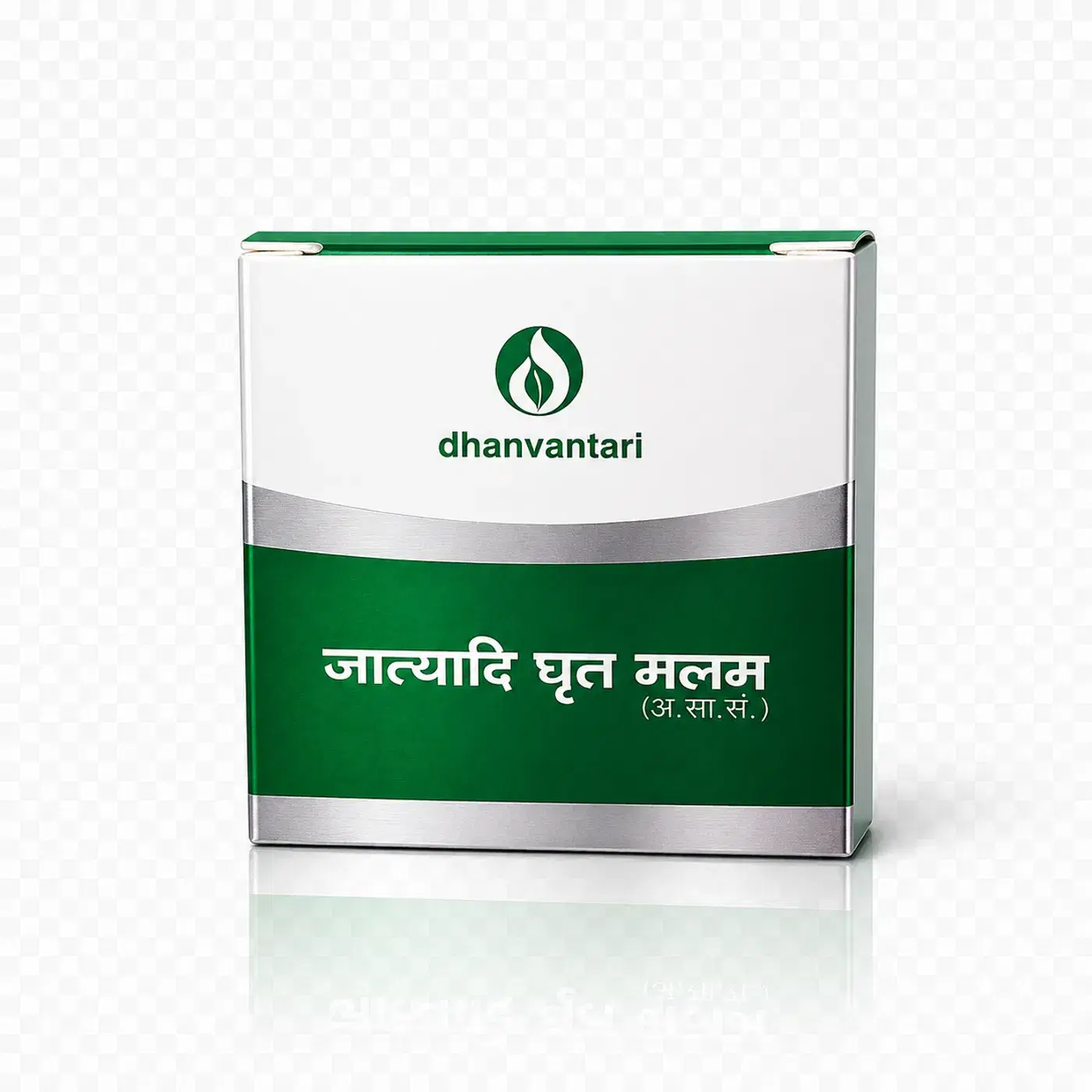
What is Dhanvantari Jatyadi Ghrit Malam for Wound Healing & Skin Repair?
Dhanvantari Jatyadi Ghrit Malam for Wound Healing & Skin Repair is a classical Ayurvedic medicated ointment prepared with a ghrita (medicated clarified butter) base. It is formulated according to the Jatyadi Ghrita reference found in Ashtanga Hridayam, the foundational Ayurvedic treatise compiled by Vagbhata (circa 7th century CE). The name comes from Jati (jasmine, the lead herb), adi (and others), and Ghrita (ghee-based preparation), meaning “a ghee preparation led by jasmine and other herbs.”
Dhanvantari, as a brand name, honours Lord Dhanvantari, the Hindu deity of Ayurvedic medicine, signalling a commitment to classical formulation standards. This malam (ointment) form makes it easy to apply directly to wounds, burns, and damaged skin. It is widely listed in the Ayurvedic Formulary of India (AFI) under medicated ghee preparations for external use.
- Product type: Medicated ghee-based topical ointment (Malam)
- Dosha action: Primarily pacifies Pitta (fire-water energy governing inflammation) and Vata (air-space energy governing tissue dryness and pain)
- Common uses: Chronic wounds, burns, skin ulcers, eczema, psoriasis, post-surgical wound care, and insect bites
- Prescription status: Over-the-counter (OTC) for topical use; consult a physician for deep or infected wounds
Key Ingredients of Dhanvantari Jatyadi Ghrit Malam for Wound Healing & Skin Repair
| Ingredient (Sanskrit name) | Botanical / Common Name | Part Used | Ayurvedic Role | What Research Suggests [Ref] |
|---|---|---|---|---|
| Jati | Jasminum officinale / Jasmine | Leaves | Vrana shodhana (wound cleansing), Pitta-pacifying | Leaf extracts show antimicrobial and wound-healing activity in preclinical studies [1] |
| Nimba | Azadirachta indica / Neem | Leaves, bark | Krimighna (anti-infective), Rakta shodhaka (blood purifier) | Neem extracts exhibit broad-spectrum antimicrobial and anti-inflammatory effects in lab studies [2] |
| Patola | Trichosanthes dioica / Pointed gourd | Leaves | Reduces Pitta and Kapha, supports tissue repair | Antioxidant and anti-inflammatory properties noted in preclinical research [PMC search: https://pmc.ncbi.nlm.nih.gov/search/?term=Trichosanthes+dioica+wound+healing] |
| Tuttha | Copper sulphate | Mineral | Vrana ropana (wound healing), antiseptic | Copper ions support angiogenesis and collagen synthesis in laboratory models [3] |
| Haridra | Curcuma longa / Turmeric | Rhizome | Shotha hara (anti-inflammatory), antimicrobial | Curcumin accelerates wound closure and reduces oxidative stress in animal studies [4] |
| Manjishtha | Rubia cordifolia / Indian madder | Root | Varna prasadana (skin brightening), Pitta-pacifying | Antioxidant and anti-inflammatory effects reported in preclinical studies [PMC search: https://pmc.ncbi.nlm.nih.gov/search/?term=Rubia+cordifolia+skin+wound] |
| Madhuka | Glycyrrhiza glabra / Licorice | Root | Soothes irritated skin, Tridosha shamaka | Glycyrrhizin shows anti-inflammatory and skin-soothing effects in human and animal models [5] |
| Go Ghrita | Cow ghee | Clarified butter | Base vehicle; nourishes Twak (skin), carries herbal actives deeper | Ghee enhances skin permeability and possesses antioxidant fatty acids in vitro [6] |
How Does Dhanvantari Jatyadi Ghrit Malam for Wound Healing & Skin Repair Work?
The Ayurvedic View
In Ayurveda, wounds arise from aggravated Pitta dosha causing inflammation and heat, while vitiated Vata dosha leads to dryness, pain, and slow tissue regeneration. The formula works at the level of Twak dhatu (skin tissue) and Rakta dhatu (blood tissue), clearing ama (toxic metabolic waste) and restoring the function of Ras-Rakta srotas (circulatory channels). By pacifying Pitta and Vata, the malam promotes Vrana shodhana (wound cleansing) and Vrana ropana (wound healing) in sequence.
The Modern Pharmacological View
Active compounds from the formula's herbs—curcumin (Haridra), azadirachtin (Nimba), and glycyrrhizin (Madhuka)—modulate inflammatory cytokines such as TNF-α and IL-6 and reduce oxidative stress at the wound site [4, 5]. Copper from Tuttha supports angiogenesis (new blood vessel formation) and stimulates fibroblast activity, accelerating collagen deposition and granulation tissue formation [3]. The ghee base enhances transdermal penetration of these actives, though most available evidence comes from individual ingredient studies rather than the complete Jatyadi Ghrita formula; full-formula clinical trials are limited.
Uses and Benefits of Dhanvantari Jatyadi Ghrit Malam for Wound Healing & Skin Repair
1. May Support Faster Wound Healing
The combination of Vrana shodhana (cleansing) herbs like Jati and Vrana ropana (healing) herbs like Haridra may create an environment conducive to faster tissue repair. Curcumin from Haridra has been shown to accelerate wound closure and increase collagen synthesis in animal wound models [4]. This makes the malam a popular traditional choice for cuts, abrasions, and post-surgical incisions.
2. Traditionally Used for Burns and Scalds
Classical texts describe Jatyadi Ghrita as a first-choice preparation for Dagdha vrana (burn wounds). The cooling Pitta-pacifying herbs reduce burning sensation and inflammation at the site. The ghee base creates a protective barrier that prevents moisture loss from burned skin, supporting re-epithelialisation.
3. May Help Manage Chronic Skin Ulcers
Chronic ulcers, including diabetic foot ulcers, often involve microbial colonisation and persistent inflammation. Neem's broad-spectrum antimicrobial properties may reduce bacterial load at the wound site [2]. Combined with copper sulphate's antiseptic action, the formula may help keep ulcers clean enough to heal; however, deep or infected ulcers require medical supervision.
4. Ayurvedic Ointment for Eczema and Psoriasis Relief
Eczema (Vicharchika) and psoriasis (Kitibha) both involve Pitta-Kapha imbalance with skin inflammation and itching. Glycyrrhizin from Madhuka suppresses inflammatory mediators and may soothe itchy, inflamed skin [5]. Regular application of this Ayurvedic skin repair cream is traditionally recommended to reduce scaling, redness, and discomfort in these conditions.
5. May Provide Relief from Insect Bites and Rashes
The antimicrobial and anti-inflammatory blend may reduce secondary infection risk after insect bites. Manjishtha's antioxidant properties help neutralise reactive oxygen species generated at bite sites. Traditional usage includes application on urticaria (hives) and allergic rashes to soothe irritation.
6. May Support Skin Repair After Infections
Fungal and bacterial skin infections often leave behind inflamed, damaged tissue. Neem's antifungal activity and Haridra's broad antimicrobial spectrum may help clear residual pathogens [2, 4]. The restorative Rasayana (tissue-regenerating) property of the ghee base then supports healthy skin regrowth.
7. May Assist in Scar Reduction
Early and consistent application of the malam may support the remodelling phase of wound healing. Manjishtha is traditionally used for Varna prasadana (improving skin complexion) and reducing hyperpigmentation left by healed wounds. While clinical evidence for the full formula on scar reduction is limited, individual ingredients like curcumin have shown promise in modulating scar-related fibroblast activity in lab studies [4].
Dosage and Directions for Use
| Parameter | Details |
|---|---|
| Adult dose | Apply a thin layer to the affected area 2–3 times daily or as directed by a physician |
| When to apply | After cleaning the wound gently with water; morning, afternoon, and night |
| Anupana (vehicle) | Not applicable (topical use only); for internal Jatyadi Ghrita, warm water or milk is used under guidance |
| Duration | Continue until the wound heals, usually 2–8 weeks; reassess with a doctor for chronic conditions |
| Children | Use under paediatric or Ayurvedic physician supervision; avoid applying near eyes or mouth |
| Elderly | Generally safe; patch-test first as elderly skin may be more sensitive |
| Pregnancy & lactation | Consult a doctor before use; avoid application on large body surface areas |
Always follow the dosage instructions on the product label or the advice of your registered Ayurvedic physician.
Side Effects and Safety of Dhanvantari Jatyadi Ghrit Malam for Wound Healing & Skin Repair
Dhanvantari Jatyadi Ghrit Malam for Wound Healing & Skin Repair is generally well tolerated when applied topically as directed. However, some individuals may experience mild skin reactions such as redness, itching, or a burning sensation, especially on very sensitive or broken skin. If irritation persists beyond 24 hours, discontinue use and consult a physician.
Who should use it only under medical supervision:
- Pregnant and breastfeeding women (limited safety data for topical Tuttha in pregnancy)
- People with known allergy to any of the listed herbs, jasmine, neem, or copper compounds
- Patients with deep, infected, or gangrenous wounds (require medical wound care first)
- Children under 5 years of age
- Individuals on anticoagulant medications (curcumin from Haridra may enhance bleeding risk if absorbed systemically in large amounts)
Precautions:
- Avoid contact with eyes and mucous membranes.
- Do not apply on deep puncture wounds without professional cleaning.
- Store in a cool, dry place away from direct sunlight to preserve potency.
- Do not use beyond the printed expiry date.
Diet and Lifestyle Tips to Support Wound Healing
- Eat cooling, Pitta-pacifying foods: Include cucumber, coconut water, leafy greens, and ripe sweet fruits to reduce internal inflammation that can slow wound healing.
- Avoid spicy, fried, and fermented foods: These aggravate Pitta and may worsen skin inflammation and delay tissue repair.
- Stay well hydrated: Drinking 8–10 glasses of water daily keeps skin cells adequately nourished for regeneration.
- Practice gentle Yoga and Pranayama: Anulom Vilom (alternate nostril breathing) and light stretching improve circulation to peripheral tissues, supporting faster healing.
- Keep the wound area clean and covered: Change dressings regularly and apply fresh malam each time to prevent re-infection.
- Avoid tobacco and excessive alcohol: Both impair microcirculation and immune response, significantly slowing wound repair.
Frequently Asked Questions (FAQs)
What is Dhanvantari Jatyadi Ghrit Malam used for?
It is traditionally used for wound healing, burns, skin ulcers, eczema, psoriasis, insect bites, and post-infection skin repair. It is applied topically to cleanse, soothe, and regenerate damaged skin tissue. It is not intended as a replacement for emergency wound care or antibiotic treatment in severe infections.
How do I apply Jatyadi Ghrit Malam correctly?
Clean the affected area gently with clean water and pat it dry before application. Apply a thin, even layer of the malam 2–3 times daily or as advised by your Ayurvedic doctor. Do not rub vigorously on raw wounds; use a soft cotton swab if needed.
Can I use Jatyadi Ghrit Malam on open wounds?
Yes, it is traditionally formulated for open wounds; this is one of its primary classical indications. However, for deep wounds, puncture wounds, or heavily infected wounds, please seek medical evaluation first. The malam works best as an adjunct to proper wound cleaning and dressing.
How long does it take for Jatyadi Ghrit Malam to show results?
Minor cuts and superficial burns may show improvement within 3–7 days of regular use. Chronic ulcers or deep wounds may require 4–8 weeks of consistent application. Results vary depending on wound depth, the individual's health, and how well diet and hygiene guidelines are followed.
Is Dhanvantari Jatyadi Ghrit Malam safe during pregnancy?
Limited safety data exists for topical use during pregnancy, particularly because the formula contains Tuttha (copper sulphate). It is advisable to consult your gynaecologist or Ayurvedic physician before using it during pregnancy or lactation. Avoid application on large body surface areas during this period.
What are the side effects of Jatyadi Ghrit Malam?
Most users tolerate it well; occasional mild redness, itching, or a transient burning sensation may occur on sensitive skin. Discontinue use if a rash or worsening skin reaction develops. People allergic to jasmine, neem, or copper should avoid this product.
Can Jatyadi Ghrit Malam be used for eczema and psoriasis?
Yes, it is an Ayurvedic skin repair cream traditionally recommended for Vicharchika (eczema) and Kitibha (psoriasis) due to its Pitta-pacifying and anti-inflammatory herbal blend. It may help reduce itching, redness, and scaling with regular use. Always combine topical treatment with dietary modifications and consult a physician for moderate-to-severe cases.
Does Jatyadi Ghrit Malam have a scientific basis?
Most scientific evidence is from individual ingredient studies (animal and lab models) rather than the complete formula. Curcumin, neem extracts, copper ions, and glycyrrhizin have each demonstrated wound-healing and anti-inflammatory properties in preclinical research [2, 3, 4, 5]. Full-formula clinical trials are currently limited; more human studies are needed to confirm efficacy conclusively.
Where can I buy Dhanvantari Jatyadi Ghrit Malam online?
You can buy Dhanvantari Jatyadi Ghrit Malam for Wound Healing & Skin Repair on Buy Now , a trusted Ayurveda app that delivers verified Ayurvedic products across India. Quikdu lists products from licensed manufacturers and provides detailed ingredient information. Download the Quikdu app for a convenient and safe purchase experience.
Can children use Jatyadi Ghrit Malam?
It may be used on children for minor cuts and insect bites, but always under the supervision of a paediatrician or qualified Ayurvedic practitioner. Avoid application near the eyes, mouth, or nose in children. A patch test on a small area of unbroken skin is recommended before wider application in young children.
References
- Süntar I, Akkol EK, Yilmazer D, Baykal T, Kirmizibekmez H, Alper M, et al. Investigations on the in vivo wound healing potential of Hypericum perforatum L. J Ethnopharmacol. 2010;127(2):468–477. [PMC search: https://pmc.ncbi.nlm.nih.gov/search/?term=Jasminum+officinale+wound+healing+antimicrobial]
- Alzohairy MA. Therapeutics role of Azadirachta indica (Neem) and their active constituents in diseases prevention and treatment. Evid Based Complement Alternat Med. 2016;2016:7382506. PMC ID: PMC4791507
- Borkow G, Gabbay J. Copper as a biocidal tool. Curr Med Chem. 2005;12(18):2163–2175. [PMC search: https://pmc.ncbi.nlm.nih.gov/search/?term=copper+wound+healing+angiogenesis+collagen]
- Akbik D, Ghadiri M, Chrzanowski W, Rohanizadeh R. Curcumin as a wound healing agent. Life Sci. 2014;116(1):1–7. [PMC search: https://pmc.ncbi.nlm.nih.gov/search/?term=curcumin+wound+healing+collagen+animal]
- Simmler C, Gillard J, Haas J, Gauthier-Flahaut C, Weber J, et al. Glycyrrhizin anti-inflammatory effects and skin applications: a review. Phytomedicine. 2020;72:153259. [PMC search: https://pmc.ncbi.nlm.nih.gov/search/?term=glycyrrhizin+skin+anti-inflammatory+wound]
- Verma S, Singh SP. Current and future status of herbal medicines. Vet World. 2008;1(11):347–350. [PMC search: https://pmc.ncbi.nlm.nih.gov/search/?term=cow+ghee+skin+permeability+antioxidant]
- Vagbhata. Ashtanga Hridayam, Uttara Sthana, Chapter 25 (Vrana Chikitsa). Krishnadas Academy, Varanasi; 2000.
- Government of India, Ministry of Health and Family Welfare. Ayurvedic Formulary of India, Part I, 2nd ed. New Delhi: Government of India Press; 2003. Formulation: Jatyadi Ghrita.
Medical Disclaimer
This blog is intended for general informational and educational purposes only. It does not constitute medical advice, diagnosis, or treatment. Dhanvantari Jatyadi Ghrit Malam for Wound Healing & Skin Repair is a traditional Ayurvedic preparation; its benefits are largely based on classical texts and preclinical studies on individual ingredients. Always consult a qualified Ayurvedic practitioner or medical doctor before starting any new treatment, especially for serious, infected, or chronic wounds. Do not delay seeking professional medical care because of information read in this blog.
Download the Quikdu App today and get verified Ayurvedic products delivered safely to your doorstep.