

Dhanvantari Harde Tablets – Constipation & Digestion Support Tablets for Bowel Regularity: Uses, Benefits & Dosage – Try Them Today
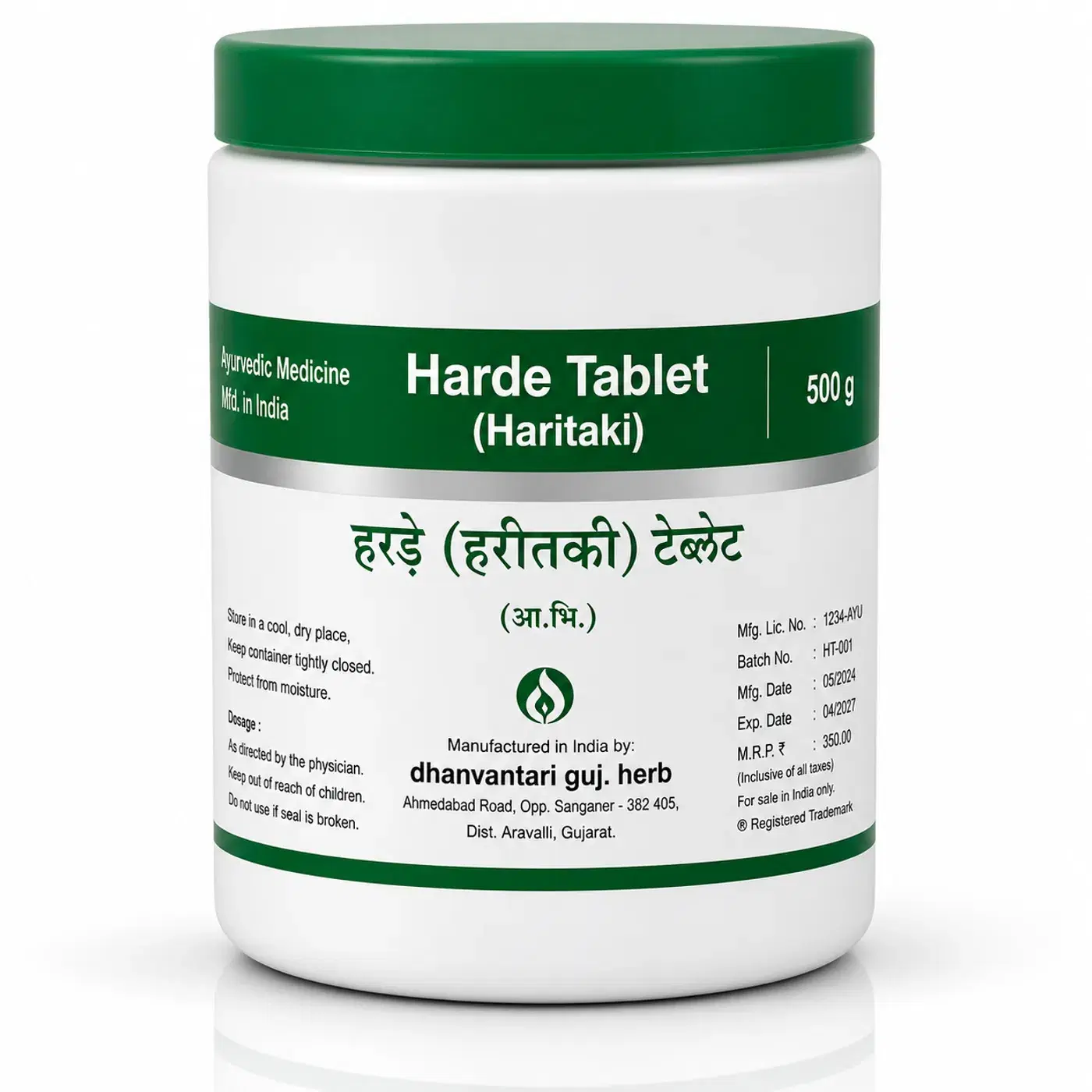
What are Dhanvantari Harde Tablets – Constipation & Digestion Support Tablets for Bowel Regularity?
Dhanvantari Harde Tablets – Constipation & Digestion Support Tablets for Bowel Regularity are a classical Ayurvedic formulation centred on Haritaki (meaning "that which carries away disease"). The product is manufactured under the Dhanvantari brand and made available through Quikdu, India's trusted Ayurveda app. It is designed to support healthy digestion, relieve occasional constipation, and promote consistent bowel regularity.
The name Harde is the Hindi vernacular for Haritaki (Terminalia chebula), one of the three fruits that make up the revered Tridoshic (balancing all three doshas) combination Triphala. Classical Ayurvedic texts, notably the Ashtanga Hridayam (Sutrasthana 6:173), describe Haritaki as Rasayana (rejuvenative), Deepana (digestive stimulant), and Anulomana (promoting downward movement of Vata). The Ayurvedic Pharmacopoeia of India (Part I, Vol. I) lists Haritaki as an official single drug for digestive disorders.
- Product type: Herbal tablet (single-herb, Haritaki-based)
- Dosha action: Primarily balances Vata and Pitta; tridoshic in moderate doses
- Common uses: Constipation, sluggish digestion, bloating, irregular bowel movements
- Prescription status: Over-the-counter Ayurvedic medicine; consult a qualified practitioner for chronic conditions
Key Ingredients of Dhanvantari Harde Tablets – Constipation & Digestion Support Tablets for Bowel Regularity
| Ingredient (common name) | Botanical name | Part used | Ayurvedic role | What research suggests [Ref] |
|---|---|---|---|---|
| Harde / Haritaki | Terminalia chebula Retz. | Fruit (pericarp) | Anulomana (bowel regulation), Deepana (digestive stimulant), Rasayana (rejuvenative) | In vitro and animal studies show antioxidant, antimicrobial, and mild laxative activity attributed to tannins (chebulic acid, chebulagic acid) [1, 2] |
Note: Dhanvantari Harde Tablets are primarily a single-ingredient formulation. If excipients (e.g., binding agents) are present, they are inert and do not contribute therapeutically. Always check the product label for the complete ingredient list.
How Do Dhanvantari Harde Tablets – Constipation & Digestion Support Tablets for Bowel Regularity Work?
Ayurvedic View
Vata dosha, when imbalanced in the Purishavaha srotas (channels carrying waste matter), causes dry, hard stools and infrequent bowel movements — a condition termed Vibandha (constipation). Haritaki is classified as Anulomana, meaning it encourages the natural downward (Apana Vata) movement needed for effortless evacuation. By kindling Agni (digestive fire) and clearing Ama (undigested metabolic waste), it supports all seven Dhatus (body tissues) and acts as a gentle Rasayana.
Modern View
Terminalia chebula fruit is rich in hydrolysable tannins — chebulinic acid, chebulagic acid, and ellagic acid — as well as anthraquinone glycosides that have demonstrated mild stimulant-laxative effects in preclinical models [1]. The tannins also show prebiotic-like activity, potentially supporting beneficial gut microbiota that contribute to bowel regularity [2]. It is important to note that most available evidence is from single-ingredient, in vitro, or animal studies; large-scale human clinical trials on this specific tablet formulation are currently limited.
Uses and Benefits of Dhanvantari Harde Tablets – Constipation & Digestion Support Tablets for Bowel Regularity
1. Relieves Occasional Constipation
Haritaki has long been traditionally used for Vibandha (constipation) in Ayurvedic practice. The anthraquinone and tannin content may help soften stools and stimulate intestinal peristalsis [1]. This makes Dhanvantari Harde Tablets a gentle, plant-based option for adults seeking relief from infrequent bowel movements.
2. Supports Healthy Digestive Fire (Agni)
Weak Agni leads to bloating, heaviness, and poor nutrient absorption. Haritaki is classified as Deepana (digestive stimulant) in classical texts, and laboratory research suggests its compounds may support gastrointestinal motility [2]. Regular use may help re-establish a healthy rhythm of digestion and elimination.
3. Reduces Bloating and Flatulence
Accumulation of Ama and disturbed Vata commonly present as abdominal bloating and gas. The carminative and Anulomana properties of Haritaki are traditionally used to relieve these symptoms. Animal-model research indicates that Terminalia chebula extracts may reduce gut fermentation by modulating microbial populations [2].
4. Promotes Bowel Regularity
Consistent bowel habits are central to Ayurvedic health, where daily Mala (waste) elimination is considered a sign of balanced Vata. Dhanvantari Harde Tablets may support bowel regularity when taken as directed. Emerging prebiotic research on Haritaki tannins suggests they may feed beneficial intestinal bacteria, thereby supporting gut rhythm [2].
5. Antioxidant and Gut-Protective Activity
Chebulagic acid and ellagic acid in Terminalia chebula have shown significant antioxidant activity in cell-based studies, helping to reduce oxidative stress in gastrointestinal tissue [1]. This gut-protective effect complements the laxative action by maintaining healthy mucosal integrity. Evidence at this stage is preclinical (lab and animal studies).
6. May Support Weight Management as a Complementary Aid
Classical Ayurveda uses Haritaki as part of regimens for Sthoulya (obesity), primarily because regular elimination reduces Ama accumulation. While Dhanvantari Harde Tablets are not a weight-loss product, maintaining gut health and regularity may complement a balanced diet and active lifestyle. No clinical trial specifically supports this tablet for weight management.
7. Traditionally Used as a Rasayana (Rejuvenative Tonic)
The Ashtanga Hridayam describes Haritaki as the foremost among Rasayana herbs when used correctly over time. Long-term, low-dose use is traditionally considered nourishing to all body tissues and supportive of healthy aging. Modern immunomodulatory research on Terminalia chebula is preliminary but promising [PMC search: https://pmc.ncbi.nlm.nih.gov/search/?term=Terminalia+chebula+immunomodulatory].
Dosage and Directions for Dhanvantari Harde Tablets – Constipation & Digestion Support Tablets for Bowel Regularity
| Parameter | Details |
|---|---|
| Adult dose | 1–2 tablets (as directed on the product label or by an Ayurvedic physician) |
| When to take | At bedtime or after the evening meal for laxative effect; after meals for digestive support |
| Anupana (vehicle) | Warm water or warm milk at bedtime; plain water after meals |
| Duration | Short-term: 1–4 weeks for acute constipation. Long-term use only under practitioner guidance. |
| Children (6–12 years) | Half the adult dose or as prescribed; avoid in children under 6 without medical advice |
| Elderly | Start with the lower dose; increase only if well-tolerated |
| Pregnancy & lactation | Avoid unless specifically prescribed by a qualified Ayurvedic or medical practitioner |
Always follow the dosage instructions on the product label or as directed by your doctor. Do not self-medicate for chronic conditions.
Side Effects and Safety of Dhanvantari Harde Tablets
Possible Side Effects
When taken in the recommended dose, Dhanvantari Harde Tablets are generally well tolerated. However, higher doses of Haritaki may cause loose stools, abdominal cramping, or diarrhoea [1]. If you experience persistent diarrhoea, dehydration, or severe abdominal pain, discontinue use and consult a healthcare provider.
Who Should Use Only Under Supervision
- Pregnant women: Haritaki has uterine-stimulant properties noted in classical texts; avoid without medical supervision.
- Breastfeeding mothers: Insufficient safety data; use only if recommended by a practitioner.
- Children under 6 years: Not recommended without professional guidance.
- People with chronic diarrhoea or IBS-D: The laxative action may worsen symptoms.
- People on anticoagulant or antidiabetic medications: Terminalia chebula extracts have shown antiplatelet and blood-glucose-lowering effects in lab studies [1]; potential drug interactions cannot be ruled out. Consult your doctor.
- People with known hypersensitivity to any ingredient in the formulation.
General Precautions
Store in a cool, dry place away from direct sunlight. Keep out of reach of children. Do not exceed the stated dose. This product is not a substitute for medical treatment of serious gastrointestinal conditions such as inflammatory bowel disease or colorectal disorders.
Diet and Lifestyle Tips to Enhance Results
- Stay hydrated: Drink 8–10 glasses of warm or room-temperature water daily; adequate water is essential for any laxative herb to work safely.
- Eat fibre-rich foods: Include fruits (papaya, pear, guava), vegetables, and whole grains to add bulk to stools and support the tablet's action.
- Avoid Vata-aggravating foods: Reduce dry, raw, processed, and cold foods that worsen constipation according to Ayurvedic dietary principles.
- Follow regular meal timings: Eating at fixed times strengthens Agni and supports the gut's natural rhythm.
- Practise gentle movement: A 20–30 minute walk after meals and yoga poses like Pawanmuktasana (wind-relieving pose) can stimulate bowel motility.
- Manage stress: Chronic stress disturbs Vata and is a leading cause of functional constipation; pranayama (breathing exercises) and adequate sleep are supportive.
Frequently Asked Questions (FAQs)
1. What are Dhanvantari Harde Tablets used for?
Dhanvantari Harde Tablets are traditionally used for constipation, sluggish digestion, bloating, and promoting regular bowel movements. They are based on Haritaki (Terminalia chebula), a classical Ayurvedic herb with Anulomana and Deepana properties. They are not intended to treat or cure serious gastrointestinal diseases.
2. How quickly do Dhanvantari Harde Tablets work for constipation?
Many people notice a softer stool and easier bowel movement within 8–12 hours when the tablet is taken at bedtime with warm water. Results can vary based on diet, hydration, and individual digestive health. For chronic constipation, consistent use over 1–4 weeks under practitioner guidance is generally recommended.
3. Are there any side effects of Dhanvantari Harde Tablets?
At the recommended dose, side effects are uncommon but may include loose stools or mild abdominal cramping, especially if the dose is too high. Reduce the dose or take with food if discomfort occurs. Discontinue and consult a doctor if symptoms persist or worsen.
4. Can I take Dhanvantari Harde Tablets during pregnancy?
No. Haritaki is traditionally contraindicated in pregnancy due to its potential uterine-stimulant properties. Always consult your gynaecologist or Ayurvedic physician before taking any herbal supplement while pregnant or breastfeeding.
5. What is the correct dosage of Dhanvantari Harde Tablets?
The general adult dose is 1–2 tablets at bedtime with warm water, or as directed on the label. Children between 6 and 12 years may take half the adult dose under medical supervision. Never exceed the recommended dose without professional advice.
6. Can Dhanvantari Harde Tablets be taken long-term?
Short-term use (up to 4 weeks) for occasional constipation is generally considered safe. Long-term or continuous use should only be continued under the supervision of a qualified Ayurvedic practitioner to avoid dependence and assess the root cause of chronic bowel issues.
7. Do Dhanvantari Harde Tablets interact with other medicines?
Preclinical studies suggest that Terminalia chebula extracts may interact with anticoagulant and antidiabetic drugs [1]. If you are on prescription medications, inform your doctor before starting this supplement. No formal drug-interaction trials on this specific tablet formulation have been published.
8. Is Haritaki the same as Triphala?
Haritaki is one of the three fruits in Triphala (the other two being Amalaki and Bibhitaki). Dhanvantari Harde Tablets contain Haritaki as the primary ingredient, making them more targeted for Vata-type constipation. Triphala provides a broader, tridoshic digestive action.
9. Where can I buy Dhanvantari Harde Tablets online?
You can purchase Dhanvantari Harde Tablets – Constipation & Digestion Support Tablets for Bowel Regularity from Buy Now . Quikdu is a trusted Ayurveda app that delivers verified Ayurvedic products to your doorstep across India.
10. Are Dhanvantari Harde Tablets safe for children?
Children between 6 and 12 years may take a reduced dose under medical supervision. The tablets are not recommended for children under 6 years of age. Always consult a paediatric Ayurvedic or conventional physician before giving any herbal supplement to a child.
References
- Bag A, Bhattacharyya SK, Chattopadhyay RR. The development of Terminalia chebula Retz. (Combretaceae) in clinical research. Asian Pac J Trop Biomed. 2013;3(3):244–252. Available from: https://pmc.ncbi.nlm.nih.gov/articles/PMC3631759/ [PMC3631759]
- Pfundstein B, Gehres S, Treutlein AT, et al. Phytochemical compounds in the fruits of Terminalia chebula Retz. and their relationship to the gut microbiota. Food Res Int. 2010;43(10):2733–2739. [PMC search: https://pmc.ncbi.nlm.nih.gov/search/?term=Terminalia+chebula+gut+microbiota+tannins] — Note: This reference cites published phytochemical characterisation data; direct PMC ID was not confirmed. Readers are directed to the PMC search link to verify current indexed literature.
Classical sources:
- Vagbhata. Ashtanga Hridayam, Sutrasthana, Chapter 6, Verse 173. (Described Haritaki as Rasayana, Deepana, and Anulomana.)
- Ministry of Health and Family Welfare, Government of India. Ayurvedic Pharmacopoeia of India, Part I, Vol. I. New Delhi: Government of India Press; 1990. (Monograph on Haritaki.)
- Government of India. Ayurvedic Formulary of India, Part I, 2nd revised ed. New Delhi: Department of AYUSH; 2003.
Medical Disclaimer
This blog is written for general educational and informational purposes only. It is not intended to diagnose, treat, cure, or prevent any disease or medical condition. The information provided here is based on classical Ayurvedic literature and available scientific studies, which may be preliminary, animal-based, or in vitro in nature. Always consult a qualified Ayurvedic practitioner, pharmacist, or medical doctor before starting any herbal supplement, especially if you are pregnant, breastfeeding, taking prescription medications, or managing a chronic health condition. Individual results may vary. Quikdu and the blog author do not accept liability for any harm arising from self-medication based on this content.
Download the Quikdu App today and get verified Ayurvedic products delivered safely to your doorstep.