

Dhanvantari Arend Bhrust Harde Tablets – Constipation & Piles Support for Digestion & Bowel Relief: Uses, Benefits & Dosage Guide
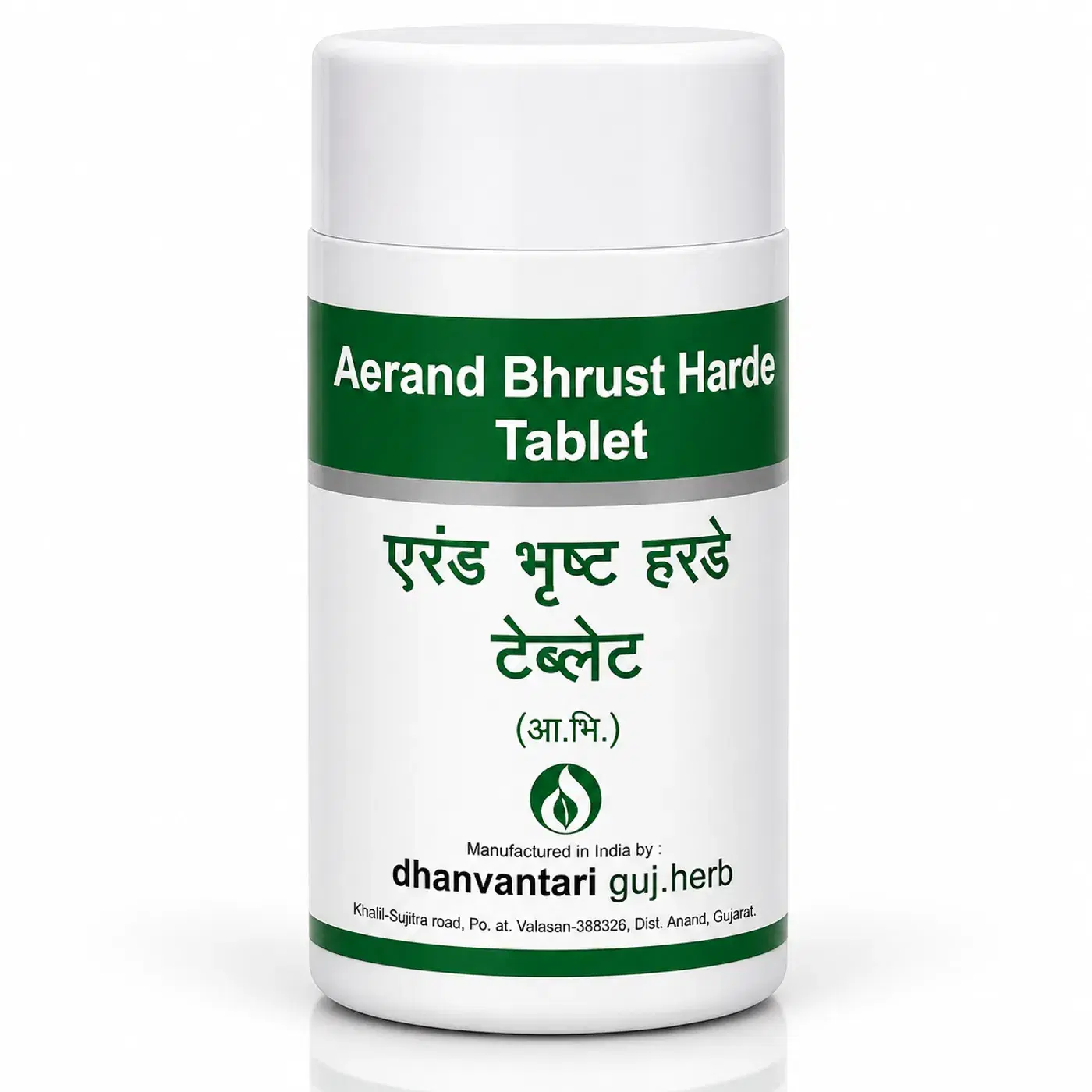
What is Dhanvantari Arend Bhrust Harde Tablets – Constipation & Piles Support for Digestion & Bowel Relief?
Dhanvantari Arend Bhrust Harde Tablets – Constipation & Piles Support for Digestion & Bowel Relief is a classical Ayurvedic compound tablet. It is rooted in the Arend Bhrust Haritaki (castor-oil-processed chebulic myrobalan) preparation described in traditional Ayurvedic texts, including references found in Ashtanga Hridayam and the Ayurvedic Pharmacopoeia of India. The formulation combines the laxative power of castor oil (Arenda taila) with the digestive intelligence of Haritaki (Terminalia chebula) to address sluggish bowel movement, bloating, piles, and related rectal discomfort.
The name breaks into three parts: Arenda (castor plant, Ricinus communis), Bhrust (processed or fried in), and Harde (a common Hindi name for Haritaki). Together they describe a Haritaki fruit that has been classically processed in castor oil to enhance its anulomana (bowel-normalising) and Vata-pacifying properties. This processing step is called shodhana (purification and potentiation) in Ayurvedic pharmacy.
- Product type: Ayurvedic proprietary tablet
- Dosha action: Primarily pacifies Vata and Pitta; supports Apana Vata (downward-moving energy governing elimination)
- Common uses: Constipation, hard stools, bloating, flatulence, piles (haemorrhoids), and sluggish digestion
- Prescription status: Over-the-counter Ayurvedic medicine; consult a physician for long-term use or if you have a diagnosed medical condition
- Brand: Dhanvantari, available on Quikdu – Trusted Ayurveda App
Key Ingredients of Dhanvantari Arend Bhrust Harde Tablets – Constipation & Piles Support for Digestion & Bowel Relief
| Ingredient | Botanical / Common Name | Part Used | Ayurvedic Role | What Research Suggests |
|---|---|---|---|---|
| Haritaki (processed in Arenda taila) | Terminalia chebula Retz. | Dried fruit rind | Anulomana (laxative), Deepana (digestive stimulant), Rasayana (rejuvenative); pacifies all three doshas | In vitro and animal studies show antioxidant, anti-inflammatory, and gut-motility-enhancing activity attributed to chebulinic acid and tannins [1, 2] |
| Arenda taila (Castor oil) | Ricinus communis L. | Seed oil | Vatanulomana (Vata-correcting laxative), softens stools, relieves rectal congestion | Ricinoleic acid activates prostaglandin EP3 receptors in the intestine, increasing peristalsis; human clinical evidence supports its laxative effect [3] |
| Saindhava Lavana (where included) | Rock salt (NaCl with trace minerals) | Mineral salt | Deepana-pachana (digestive), enhances bioavailability of co-herbs | PMC search: https://pmc.ncbi.nlm.nih.gov/search/?term=saindhava+lavana+digestion |
Note: The exact proprietary blend may vary. Always check the label for the full ingredient list and quantities.
How Does Dhanvantari Arend Bhrust Harde Tablets – Constipation & Piles Support for Digestion & Bowel Relief Work?
The Ayurvedic View
According to Ayurvedic physiology, constipation and piles arise primarily from aggravated Vata dosha in the Purishavaha srotas (channels carrying waste matter). Aggravated Vata dries the Purishdhatu (stool tissue), hardens it, and impairs Apana Vata, the sub-dosha responsible for downward expulsion. Weak Jatharagni (digestive fire) leads to ama (undigested toxins) accumulating in the gut, further blocking normal transit. Arend Bhrust Haritaki is specifically indicated in classical texts as an anulomana (bowel-normalising) and sroto-shodhaka (channel-cleansing) formulation that restores Apana Vata, kindles Agni, and clears ama from the large intestine.
The Modern Pharmacological View
Ricinoleic acid in castor oil binds EP3 prostaglandin receptors on intestinal smooth muscle, triggering peristaltic contractions and increasing fluid secretion into the bowel lumen [3]. Chebulinic acid, chebulagic acid, and gallotannins in Terminalia chebula show antioxidant and anti-inflammatory activity in laboratory models, and animal studies suggest they may enhance gut motility and reduce mucosal inflammation [1, 2]. It is important to note that most mechanistic evidence is from single-ingredient or preclinical studies; large randomised controlled trials on the complete Arend Bhrust Haritaki formula in humans are limited.
Uses and Benefits of Dhanvantari Arend Bhrust Harde Tablets – Constipation & Piles Support for Digestion & Bowel Relief
1. May Support Relief from Constipation
The combination of castor oil and Haritaki is traditionally used for Vibandha (constipation) in Ayurvedic practice. Castor oil's ricinoleic acid has demonstrated laxative effects in human studies [3]. This may make the tablet a gentle option for occasional constipation when used as directed.
2. May Help Manage Piles (Haemorrhoids)
Piles are classical correlated in Ayurveda with Arsha, linked to chronic constipation, straining, and Vata-Pitta imbalance at the rectal region. By softening stools and reducing straining, the formulation may help lower pressure on rectal veins. Haritaki is specifically listed in the Ashtanga Hridayam Chikitsa Sthana as a primary herb for Arsha [4].
3. Supports Healthy Digestive Fire (Agni)
Haritaki is one of Ayurveda's foremost Deepaniya (Agni-kindling) herbs, noted across classical texts including the Charaka Samhita [4]. A well-functioning digestive fire helps break down food efficiently and reduces ama formation. Improved Agni may translate to less bloating, gas, and post-meal discomfort.
4. May Provide Relief from Bloating and Flatulence
Excess gas and bloating (Adhmana) are classic signs of Vata derangement in the gut. The carminative and Vata-pacifying properties of Haritaki, enhanced by castor oil processing, may help expel trapped gas and reduce abdominal distension. Animal studies show that Terminalia chebula extracts can reduce intestinal spasm [2].
5. Traditionally Used as a Rasayana for the Colon
Haritaki is described as the pathya (most suitable) herb for the large intestine in Ashtanga Hridayam and Charaka Samhita [4]. Regular, supervised use may support the long-term health and tone of the colon mucosa. This rejuvenative (Rasayana) quality distinguishes it from purely stimulant laxatives.
6. May Reduce Rectal Discomfort and Itching
Anti-inflammatory compounds in Terminalia chebula, such as chebulagic acid, have shown activity against inflammatory mediators in cell-based studies [1]. Reduced local inflammation in the rectal region may ease itching, heaviness, and discomfort associated with piles. This benefit is traditionally documented and supported by preclinical evidence.
7. May Support Overall Bowel Regularity
By addressing the root Ayurvedic cause (Vata imbalance and weak Agni) rather than only the symptom, the formulation aims for sustainable bowel regularity. A review of Terminalia chebula's pharmacology noted its multi-target effects on the gastrointestinal tract [2]. Consistent, directed use alongside dietary changes may lead to more regular and comfortable elimination.
Dosage and Directions
| Parameter | Details |
|---|---|
| Adult dose | 1–2 tablets (as indicated on the product label) |
| When to take | At bedtime or as directed by an Ayurvedic physician |
| Anupana (vehicle) | Warm water or warm milk; lukewarm water preferred for faster action |
| Duration | Short-term: 1–4 weeks for acute constipation; long-term use only under medical supervision |
| Children | Not recommended without consultation with a qualified practitioner |
| Elderly | Start with a lower dose; increase only if well tolerated |
| Pregnancy & lactation | Avoid; castor oil is a uterine stimulant (see Safety section) |
Always follow the dosage on the product label or the advice of your doctor or Ayurvedic physician.
Side Effects and Safety of Dhanvantari Arend Bhrust Harde Tablets
Dhanvantari Arend Bhrust Harde Tablets are generally well tolerated at recommended doses. However, like any laxative preparation, overuse or high doses may cause loose stools, abdominal cramping, or electrolyte imbalance. If you experience severe diarrhoea or persistent abdominal pain, stop use and consult a doctor.
Who should avoid or use only under supervision:
- Pregnant women: Castor oil (Arenda taila) stimulates uterine contractions and may increase the risk of preterm labour [3]. Avoid during pregnancy.
- Breastfeeding women: Safety data is insufficient; consult a physician before use.
- Children under 12: Use only under qualified medical guidance.
- People with inflammatory bowel disease (IBD), Crohn's disease, or intestinal obstruction: Laxative preparations may worsen these conditions.
- Those on anticoagulant or antiplatelet medications: Tannins in Haritaki may theoretically affect drug absorption; consult your doctor.
- Individuals with known hypersensitivity to any ingredient: discontinue and seek medical advice immediately.
Drug interactions: Haritaki tannins may reduce the absorption of oral medications if taken simultaneously. Take any prescription medication at least two hours apart from this tablet.
Diet and Lifestyle Tips to Support Bowel Health
- Hydrate well: Drink 8–10 glasses of warm or room-temperature water daily to keep stools soft and ease transit.
- Eat fibre-rich foods: Include cooked vegetables, whole grains, and ripe fruits (papaya, guava, prunes) in every meal to feed healthy gut motility.
- Avoid Vata-aggravating foods: Reduce dry, cold, raw, and processed foods that increase intestinal dryness and gas.
- Move every day: Even a 30-minute brisk walk supports peristalsis and reduces straining during bowel movements.
- Maintain a toilet routine: Sit on the toilet at the same time each morning; do not suppress the urge to defecate, as this worsens Apana Vata imbalance.
- Manage stress: Vata dosha is aggravated by anxiety and irregular schedules. Yoga, pranayama, and adequate sleep help maintain gut-brain balance.
Frequently Asked Questions (FAQs)
1. What is Dhanvantari Arend Bhrust Harde Tablets used for?
It is traditionally used for constipation, hard stools, bloating, flatulence, and piles (haemorrhoids). The formulation targets aggravated Vata in the large intestine. It may also support overall digestive health and regularity.
2. How long does it take for Arend Bhrust Harde to work for constipation?
Castor oil typically produces a laxative effect within 2–6 hours of ingestion [3]. For chronic constipation or piles, consistent use over 1–4 weeks under medical guidance may be needed. Individual results can vary based on diet, hydration, and the severity of imbalance.
3. Can I take these tablets every day?
Short-term daily use (1–4 weeks) is generally considered safe at recommended doses. Long-term daily use should only continue under the supervision of an Ayurvedic physician. Overuse of any laxative can lead to dependency or electrolyte loss.
4. Are Dhanvantari Arend Bhrust Harde Tablets safe during pregnancy?
No. Castor oil is a recognised uterine stimulant and should be avoided during pregnancy [3]. Consult your gynaecologist and Ayurvedic doctor before taking any herbal supplement while pregnant.
5. What is the correct dosage of Arend Bhrust Harde Tablets for adults?
The standard adult dose is 1–2 tablets at bedtime with warm water, or as directed on the product label. Do not exceed the recommended dose without medical advice. Always check the current label instructions, as formulations can vary.
6. Can Arend Bhrust Harde Tablets cure piles permanently?
These tablets may help manage symptoms of piles such as hard stools and straining, but they are not a permanent cure. Piles may require a comprehensive approach including diet, lifestyle changes, and medical treatment. Consult a qualified practitioner for a personalised plan.
7. What are the side effects of Arend Bhrust Harde Tablets?
Possible side effects at high doses include loose stools, abdominal cramping, and, with prolonged overuse, electrolyte imbalance. Most users tolerate the recommended dose well. Stop use and consult a doctor if you experience severe diarrhoea or pain.
8. Is this tablet suitable for children?
This product is not recommended for children under 12 without a qualified practitioner's guidance. Dosing in children requires careful adjustment. Always seek professional advice before giving Ayurvedic laxative formulas to children.
9. Where can I buy Dhanvantari Arend Bhrust Harde Tablets?
You can buy them securely on the Quikdu – Trusted Ayurveda App at the Buy Now . Quikdu delivers verified Ayurvedic products to your doorstep. Always purchase from authenticated sources to ensure product quality.
10. Can I take Arend Bhrust Harde Tablets with my other medicines?
Tannins in Haritaki may reduce the absorption of some medications. Take any prescription drug at least two hours before or after this tablet. Inform your doctor about all supplements you are using to avoid interactions.
References
- Bag A, Bhattacharyya SK, Chattopadhyay RR. The development of Terminalia chebula Retz. (Combretaceae) in clinical research. Asian Pac J Trop Biomed. 2013;3(3):244–252. Available from: https://pmc.ncbi.nlm.nih.gov/articles/PMC3631759/ [PMC3631759]
- Gupta PC. Biological and pharmacological properties of Terminalia chebula Retz. (Haritaki) – an overview. Int J Pharm Pharm Sci. 2012;4(3):62–68. PMC search: https://pmc.ncbi.nlm.nih.gov/search/?term=Terminalia+chebula+gastrointestinal+pharmacology
- Tunaru S, Althoff TF, Nüsing RM, Diener M, Offermanns S. Castor oil induces laxation and uterus contraction via ricinoleic acid activating prostaglandin EP3 receptors. Proc Natl Acad Sci USA. 2012;109(23):9179–9184. Available from: https://pmc.ncbi.nlm.nih.gov/articles/PMC3384204/ [PMC3384204]
- Vagbhata. Ashtanga Hridayam, Chikitsa Sthana, Chapter 8 (Arsho Chikitsa) and Chapter 15 (Grahanidosha Chikitsa). Classical Ayurvedic text, circa 7th century CE. Referenced via: Government of India, Ministry of AYUSH. Ayurvedic Pharmacopoeia of India, Part I, Volume II. New Delhi: Ministry of AYUSH; 1999.
Medical Disclaimer
This blog is for educational and informational purposes only. It is not a substitute for professional medical advice, diagnosis, or treatment. Always consult a qualified Ayurvedic physician or medical doctor before starting any new supplement, especially if you are pregnant, breastfeeding, taking prescription medications, or managing a chronic health condition. The statements in this article have not been evaluated by any regulatory authority. This product is not intended to diagnose, treat, cure, or prevent any disease.
Download the Quikdu App today and get verified Ayurvedic products delivered safely to your doorstep.