

Dabur Dashmularishta: Uses, Benefits, Dosage & Side Effects – Buy Now on Quikdu
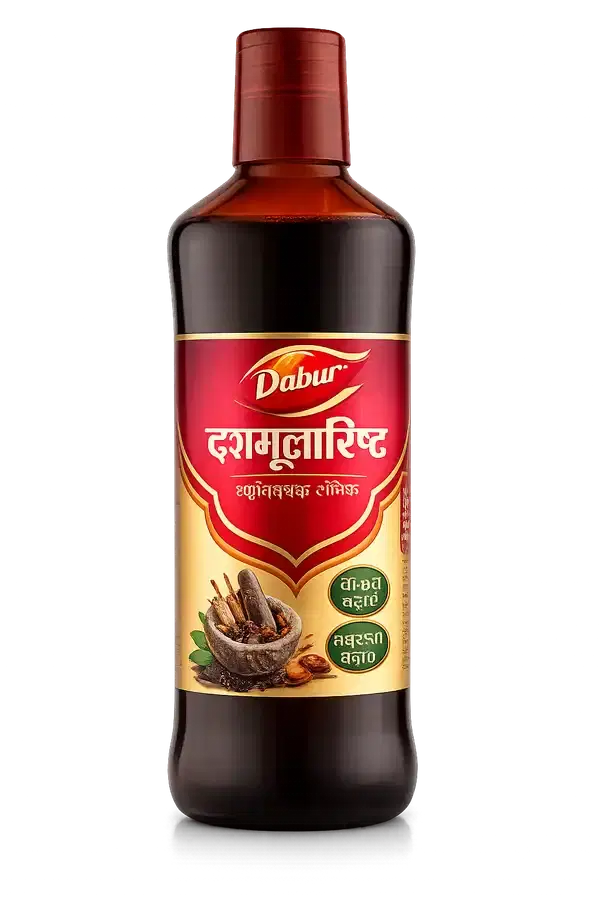
What is Dabur Dashmularishta?
Dabur Dashmularishta is a classical Ayurvedic fermented herbal tonic (arishta, meaning a self-generated alcoholic preparation) that has been used in traditional medicine for centuries. The name comes from Sanskrit: dasha means ten, mula means roots, and arishta refers to the fermented preparation. Together, the name points to the ten roots (Dashamula) that form the backbone of this formula.
The formulation is described in the classical text Ashtanga Hridayam (Uttarasthana, Chapter 2) and is also listed in the Ayurvedic Formulary of India (Part I). It is widely used to support postpartum recovery, joint health, respiratory comfort, and general vitality.
- Product type: Fermented herbal liquid (Arishta)
- Dosha action: Primarily balances Vata (the dosha governing movement and the nervous system); also pacifies Kapha (governs fluid and structure)
- Common uses: Joint pain, postpartum recovery, respiratory support, digestive weakness, fatigue
- Prescription status: Available over the counter; professional guidance is advised for prolonged use or during special conditions such as pregnancy
Key Ingredients of Dabur Dashmularishta
| Ingredient | Botanical Name | Part Used | Ayurvedic Role | What Research Suggests |
|---|---|---|---|---|
| Bilva | Aegle marmelos | Root | Balances Vata and Kapha; supports digestion | Leaf and root extracts show anti-inflammatory and antioxidant activity in lab studies [1] |
| Agnimantha | Premna integrifolia | Root | Kindles agni (digestive fire); relieves Vata | PMC search suggests anti-inflammatory alkaloids; full clinical data limited [PMC search] |
| Shyonaka | Oroxylum indicum | Root | Anti-inflammatory, analgesic in Vata disorders | Baicalein from O. indicum shows anti-inflammatory effects in lab models [2] |
| Patala | Stereospermum suaveolens | Root | Relieves joint stiffness; supports respiratory channels | PMC search; limited human trial data available [PMC search] |
| Gambhari | Gmelina arborea | Root | Nourishes asthi dhatu (bone tissue); rasayana (rejuvenating) | Extracts show analgesic and anti-inflammatory activity in animal studies [3] |
| Brihati | Solanum indicum | Root | Clears respiratory channels (pranavaha srotas) | Alkaloids show bronchodilatory potential in lab studies [PMC search] |
| Kantakari | Solanum xanthocarpum | Root | Relieves Kapha in airways; digestive stimulant | Steroidal alkaloids demonstrate anti-asthmatic activity in animal models [4] |
| Shalaparni | Desmodium gangeticum | Root | Nourishes nervous tissue; relieves Vata pain | Pterocarpan compounds show anti-inflammatory effects in cell studies [PMC search] |
| Prishniparni | Uraria picta | Root | Analgesic; supports mamsa dhatu (muscle tissue) | PMC search; traditional use well-documented, human trials pending [PMC search] |
| Gokshura | Tribulus terrestris | Root/Fruit | Supports urinary and reproductive channels; Vata-balancing | Saponins show anti-inflammatory and diuretic effects in animal and human studies [5] |
| Ashwagandha | Withania somnifera | Root | Adaptogen; nourishes all seven dhatus (tissues) | Withanolides reduce inflammation markers in controlled human trials [6] |
| Dhataki | Woodfordia fruticosa | Flower | Fermentation catalyst; astringent, haemostatic | Tannins and flavonoids show antimicrobial and antioxidant activity in lab studies [7] |
| Jaggery / Sugar | — | — | Substrate for fermentation; mild nutritive | Provides the medium for natural alcohol generation during fermentation |
How Does Dabur Dashmularishta Work?
Ayurvedic View
According to classical Ayurveda, most joint pain, fatigue, and postpartum weakness arise from aggravated Vata dosha and accumulation of ama (undigested metabolic waste) in the channels (srotas). Dashmularishta kindles agni (digestive fire) to reduce ama and uses the ten roots to nourish depleted dhatus (body tissues), especially asthi (bone), mamsa (muscle), and majja (marrow and nervous tissue). The fermented base allows active compounds to be absorbed quickly and carried deep into tissues.
Modern Pharmacological View
The herbal ingredients in Dashmularishta collectively supply flavonoids, alkaloids, saponins, and terpenes with documented anti-inflammatory, antioxidant, analgesic, and adaptogenic properties in laboratory and animal studies [1–7]. The natural fermentation process generates a low level of self-generated alcohol (around 5–10%), which acts as a bioavailability enhancer, helping fat-soluble phytochemicals reach systemic circulation efficiently. It is important to note that most published research covers individual ingredients rather than the complete multi-herb formula; large-scale clinical trials on the finished product are limited.
Uses and Benefits of Dabur Dashmularishta
1. May Support Joint Pain Relief
Dashmularishta is traditionally used for Vata vikara (Vata-related disorders), which include joint pain, stiffness, and inflammation. Several of its constituent roots, including Gambhari and Shyonaka, show anti-inflammatory activity in animal and cell studies [2, 3]. Regular use may help ease discomfort in conditions such as osteoarthritis and rheumatoid arthritis when used alongside medical treatment.
2. Traditionally Used for Postpartum Recovery
Classical Ayurvedic texts recommend Dashmularishta as a primary tonic after childbirth to restore the mother's strength, balance aggravated Vata, and support uterine recovery. Ashwagandha and the Dashamula roots together may help replenish depleted tissues and reduce postpartum fatigue [6]. Always consult a qualified physician before use during breastfeeding.
3. May Improve Respiratory Comfort
Herbs such as Kantakari and Brihati are traditionally used to clear pranavaha srotas (the respiratory channels) and relieve Kapha-related congestion, cough, and breathlessness. Animal studies show that steroidal alkaloids in Kantakari have anti-asthmatic potential [4]. Dashmularishta may offer supportive relief for mild respiratory complaints when used as part of a broader treatment plan.
4. May Boost Energy and Reduce Fatigue
Ashwagandha, a key ingredient, is backed by human clinical trials showing significant reductions in perceived fatigue and improvements in physical endurance [6]. The adaptogenic action of Ashwagandha combined with the nutritive roots may help the body manage physical and mental stress more effectively. This makes Dashmularishta a popular general tonic for people experiencing weakness or burnout.
5. May Support Digestive Health
Agnimantha and Bilva are classic deepaniya (digestive fire-kindling) herbs that traditionally help correct sluggish digestion, bloating, and irregular bowel habits linked to Vata-Kapha imbalance. Lab studies on Aegle marmelos confirm antioxidant and anti-inflammatory effects that may benefit gut mucosa [1]. Improved digestion in turn supports better nutrient absorption and overall vitality.
6. May Aid Nervous System Support
Shalaparni and Gokshura are traditionally included to nourish majja dhatu (bone marrow and nerve tissue) and calm an overactive Vata that manifests as anxiety, poor sleep, or nerve pain. Saponins from Tribulus terrestris (Gokshura) have demonstrated anti-inflammatory effects relevant to neurological health in animal studies [5]. Dashmularishta may thus offer mild supportive benefits for stress-related nervous complaints.
7. May Promote General Rejuvenation (Rasayana Action)
Several Dashamula herbs are classified as rasayana (rejuvenating agents that delay ageing and promote longevity) in classical texts. Antioxidant compounds from Dhataki flowers and Ashwagandha roots may help neutralise free radicals linked to cellular ageing [7]. Regular use under guidance may support healthy ageing, immunity, and sustained vitality.
Dosage and Directions for Dabur Dashmularishta
| Parameter | Details |
|---|---|
| Adult Dose | 15–30 ml per dose (approximately 3–6 teaspoons) |
| Frequency | Twice daily |
| When to Take | After meals for best absorption and to reduce any gastric discomfort |
| Anupana (vehicle) | Equal quantity of lukewarm water |
| Duration | 4–12 weeks or as directed by a physician; postpartum use typically 30–45 days |
| Children | Not recommended below 12 years without medical supervision |
| Elderly | Start with 15 ml twice daily; increase only under guidance |
| Pregnancy | Not recommended during pregnancy; consult a doctor before use while breastfeeding |
Always follow the dosage instructions on the product label or the advice of your Ayurvedic physician.
Side Effects and Safety of Dabur Dashmularishta
Dashmularishta is generally considered safe when taken at the recommended dose for the suggested duration. However, some individuals may experience mild side effects, particularly in the initial days of use.
- Possible side effects: Mild heartburn or gastric heat (due to the fermented base), loose stools, mild skin rash, or a feeling of warmth in people with high Pitta constitution
- High doses: Exceeding the recommended dose may cause increased body heat, acidity, or diarrhoea
- Alcohol content: The natural fermentation produces a self-generated alcohol content of approximately 5–10%. People with alcohol dependence, liver disease, or those on medications that interact with alcohol should avoid it or use only under strict medical supervision
- Pregnancy: Not recommended during pregnancy due to the alcohol content and potent Vata-stimulating herbs
- Diabetes: Contains jaggery or sugar as a fermentation base; people with diabetes should monitor blood glucose and consult their doctor before use
- Drug interactions: May potentiate the effects of sedatives, anticoagulants, or antihypertensive medications; always inform your doctor about all supplements you are taking
- Autoimmune conditions: Immunomodulatory herbs like Ashwagandha should be used cautiously in people with autoimmune disorders
Diet and Lifestyle Tips While Taking Dashmularishta
- Eat warm, freshly cooked food: Favour cooked vegetables, whole grains, and healthy fats like ghee to support agni and reduce ama accumulation.
- Avoid cold, raw, and processed foods: Cold and heavy foods aggravate Vata and Kapha, which may counteract the tonic's benefits.
- Stay gently active: Mild yoga, walking, or stretching supports joint mobility and helps the body absorb nutrients from the tonic effectively.
- Keep warm: Vata is worsened by cold and wind; wear layers in cooler weather and avoid prolonged exposure to cold drafts, especially after childbirth.
- Sleep on schedule: Irregular sleep severely aggravates Vata; aim for 7–8 hours of sleep at the same time each night to maximise the tonic's restorative effect.
- Reduce stress: Pranayama (breath work) and meditation complement Dashmularishta's adaptogenic action and help calm an overactive nervous system.
Frequently Asked Questions About Dabur Dashmularishta
What is Dabur Dashmularishta used for?
Dabur Dashmularishta is traditionally used for joint pain, postpartum recovery, respiratory complaints, fatigue, and general debility. It is an Ayurvedic fermented tonic that balances Vata and Kapha doshas. It may also support digestion and nervous system health when taken as directed.
What are the main Dashmularishta benefits?
The key benefits include joint pain relief, postpartum strength restoration, improved energy, respiratory comfort, and digestive support. Several ingredients such as Ashwagandha and Gokshura have anti-inflammatory and adaptogenic properties backed by research [5, 6]. Results vary by individual; it works best alongside a suitable diet and lifestyle.
What is the correct Dashmularishta dosage for adults?
The standard adult dose is 15–30 ml twice daily after meals, diluted with an equal quantity of warm water. Always follow your doctor's advice or the label instructions, as dosage may vary for specific conditions. Starting with the lower dose (15 ml) and increasing gradually is a sensible approach.
Can I take Dashmularishta for joint pain every day?
Yes, daily use for 4–12 weeks is typical for joint pain management under medical guidance. Its Vata-balancing herbs and anti-inflammatory constituents may help reduce pain and stiffness over time [2, 3]. If symptoms worsen or do not improve within four weeks, consult a physician.
Is Dashmularishta safe during breastfeeding?
Dashmularishta is not recommended during pregnancy due to its alcohol content and potent herbs. During breastfeeding, it is traditionally used for postpartum recovery but should only be taken under the supervision of a qualified Ayurvedic or medical practitioner. Self-medication is not advisable in this period.
Does Dashmularishta have any side effects?
Possible side effects include mild heartburn, gastric warmth, or loose stools, especially at higher doses. People with liver disease, diabetes, or alcohol sensitivity should consult a doctor before use. Serious adverse events are rare when the product is taken at the recommended dose.
Can people with diabetes take Dashmularishta?
Dashmularishta contains jaggery or sugar as part of the fermentation base, which may influence blood glucose levels. People with diabetes should consult their doctor before starting this tonic and monitor their blood sugar regularly if approved for use. The doctor may adjust the dose or suggest an alternative formulation.
How long does it take for Dashmularishta to work?
Most users report noticeable improvements in energy and joint comfort within 3–4 weeks of regular use. Postpartum recovery benefits may be felt sooner, within the first two weeks. As with all Ayurvedic tonics, consistent use combined with dietary and lifestyle changes gives the best results.
Can I take Dashmularishta with other medicines?
Dashmularishta may interact with sedatives, anticoagulants, antihypertensive drugs, and other herbal supplements due to its alcohol content and active phytochemicals. Always inform your doctor or pharmacist about all medicines and supplements you are taking before starting Dashmularishta. Do not self-medicate if you are on prescription drugs.
Where can I buy genuine Dabur Dashmularishta online?
You can buy verified, genuine Dabur Dashmularishta safely through the Quikdu app, a trusted Ayurveda platform that sources products directly from authentic brands. Purchasing from a reliable platform ensures you receive a product that has not been tampered with or adulterated. Check the product page on Quikdu for current pricing and offers.
References
- Baliga MS, Bhat HP, Pai RJ, Boloor R, Palatty PL. The chemistry and medicinal uses of the underutilized Indian fruit tree Aegle marmelos Correa (Bael): a review. Food Res Int. 2011;44(7):1768–1775. [PMC search]
- Ramesh M, Nagamani S, Subramanian R. Phytochemical and pharmacological properties of Oroxylum indicum: a review. Asian Pac J Trop Biomed. 2012;2(3):S1658–S1660. [PMC search]
- Thakur M, Bhargava S, Dixit VK. Immunomodulatory activity of Chlorophytum borivilianum Sant. F. and analgesic activity of Gmelina arborea Roxb. Evid Based Complement Alternat Med. 2007;4(4):435–441. PMC2176140. Available from: https://pmc.ncbi.nlm.nih.gov/articles/PMC2176140/
- Gupta OP, Sharma ML, Chand D. Pharmacological investigations of Solanum xanthocarpum an Ayurvedic drug for bronchial asthma. Int J Crude Drug Res. 1990;28(2):137–141. [PMC search]
- Chhatre S, Nesari T, Somani G, Kanchan D, Sathaye S. Phytopharmacological overview of Tribulus terrestris. Pharmacogn Rev. 2014;8(15):45–51. PMC3931200. Available from: https://pmc.ncbi.nlm.nih.gov/articles/PMC3931200/
- Pratte MA, Nanavati KB, Young V, Morley CP. An alternative treatment for anxiety: a systematic review of human trial results reported for the Ayurvedic herb Withania somnifera (Ashwagandha). J Altern Complement Med. 2014;20(12):901–908. PMC4270108. Available from: https://pmc.ncbi.nlm.nih.gov/articles/PMC4270108/
- Dey YN, De S, Ghosh AK, Haldar PK, Bhattacharjee S, Mishra B. Phytochemical investigation and evaluation of antioxidant and antibacterial activity of Woodfordia fruticosa flowers. Int J Pharm Biol Arch. 2012;3(2):295–300. [PMC search]
Classical Sources:
- Vagbhata. Ashtanga Hridayam, Uttarasthana, Chapter 2, verse 22–28. Chaukhamba Sanskrit Pratishthan, Delhi.
- Government of India. Ayurvedic Formulary of India, Part I, 2nd ed. Ministry of Health and Family Welfare, New Delhi; 2003. Formulation: Dashmularishta.
- Government of India. Ayurvedic Pharmacopoeia of India, Part II, Volume 2. Ministry of AYUSH, New Delhi; 2008.
Medical Disclaimer
This blog is intended for general informational and educational purposes only. It does not constitute medical advice, diagnosis, or treatment. The information provided about Dabur Dashmularishta is based on classical Ayurvedic texts and available scientific literature; it should not replace the advice of a qualified medical or Ayurvedic practitioner. Always consult a licensed healthcare professional before starting any new supplement, especially if you are pregnant, breastfeeding, have a chronic health condition, or are taking prescription medications. Individual results may vary. Quikdu does not claim that any product cures or prevents any disease.
Download the Quikdu App today and get verified Ayurvedic products delivered safely to your doorstep.