

Baidyanath Triphala Ghrita: Benefits, Uses, Dosage & Where to Buy It Today
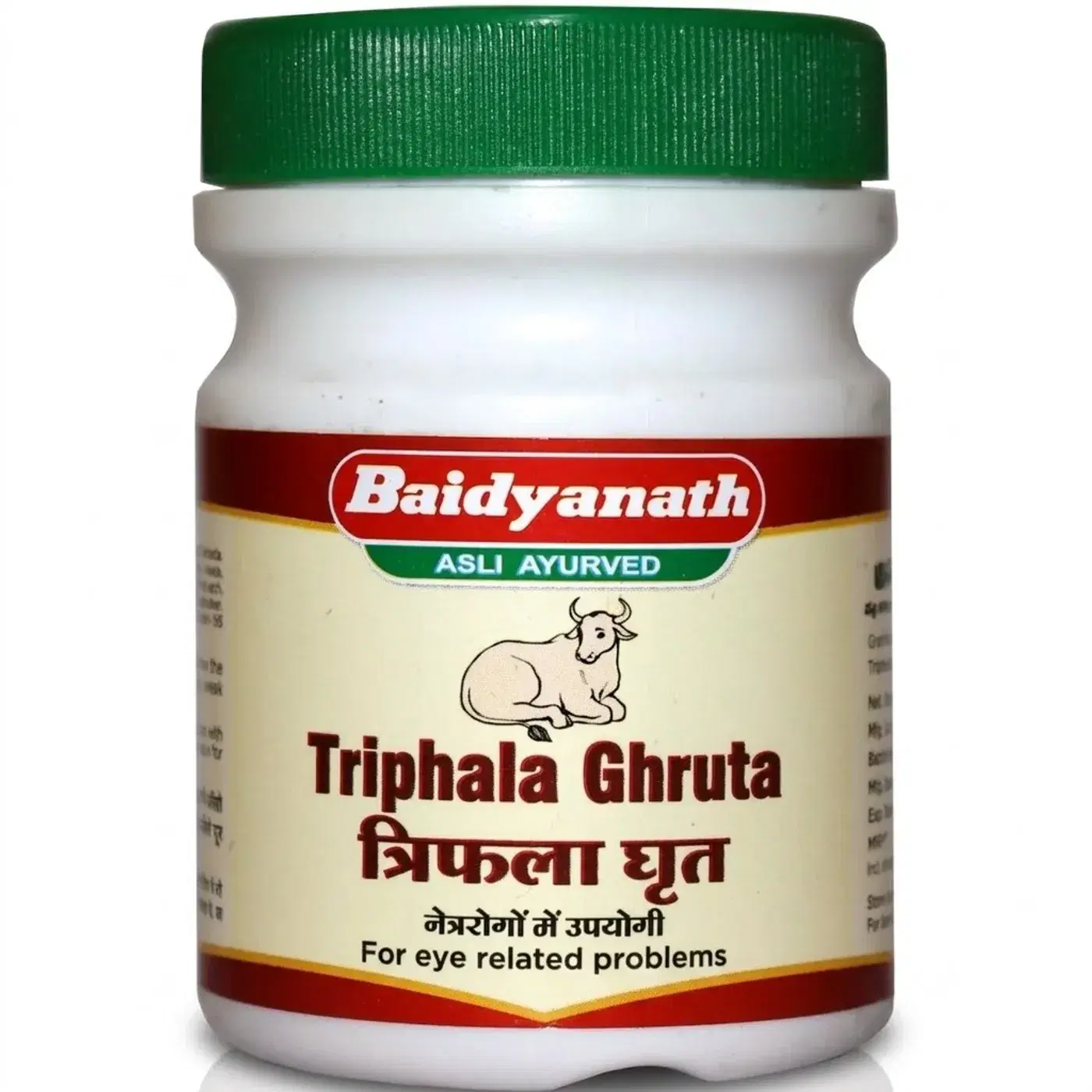
What is Baidyanath Triphala Ghrita?
Baidyanath Triphala Ghrita is a classical Ayurvedic medicated ghee (ghrita, meaning clarified butter processed with herbal decoctions) prepared primarily with Triphala — the celebrated three-fruit combination of Haritaki, Bibhitaki and Amalaki. It is described in the Ashtanga Hridayam (Uttarasthana 13) and in the Ayurvedic Formulary of India (Part I) as a premier formulation for disorders of the eyes and ears [1].
The name breaks down simply: Tri (three) + phala (fruits) + ghrita (medicated clarified butter). It has been used by Ayurvedic physicians for centuries to nourish the Chakshu (visual sense organ) and support clarity of sight.
- Product type: Medicated ghee (Ghrita kalpana)
- Dosha action: Primarily pacifies Pitta and Vata; mildly balances Kapha
- Common uses: Eye health, ear care, digestive support, general rejuvenation
- Prescription status: Available over the counter; professional guidance recommended for therapeutic use
- Manufacturer: Baidyanath — one of India's oldest and most trusted Ayurvedic brands
Key Ingredients of Baidyanath Triphala Ghrita
| Ingredient | Botanical Name | Part Used | Ayurvedic Role | What Research Suggests |
|---|---|---|---|---|
| Haritaki | Terminalia chebula | Fruit rind | Deepana (digestive), Rasayana (rejuvenative), Chakshushya (eye tonic) | Rich in chebulinic acid and gallotannins with antioxidant activity in lab studies [2] |
| Bibhitaki | Terminalia bellirica | Fruit rind | Kapha-Pitta shamaka (pacifying), anti-inflammatory | Ellagic acid and gallic acid isolates show free-radical scavenging in in-vitro studies [3] |
| Amalaki | Phyllanthus emblica | Fruit | Rasayana, highest natural source of Vitamin C, Pitta-hara (Pitta-reducing) | Demonstrated antioxidant and hepatoprotective effects; human studies show improvement in oxidative stress markers [4] |
| Cow Ghee (Go-Ghrita) | — | Clarified butter | Snehana (oleation), carrier for fat-soluble phytochemicals, Medhya (brain tonic) | Butyric acid in ghee supports gut barrier integrity in animal and lab studies [5] |
| Triphala Kashaya | Decoction of all three fruits | Aqueous extract | Tridoshahara (balancing all three doshas), Chakshushya | Combined Triphala extract shows antioxidant and anti-inflammatory activity in multiple in-vitro studies [6] |
How Does Baidyanath Triphala Ghrita Work?
The Ayurvedic View
In Ayurveda, most eye disorders (Netra rogas) arise from aggravated Pitta dosha in the Drishti (visual channels) and impaired Rasa and Rakta dhatus (plasma and blood tissues). Ama (undigested metabolic waste) blocks the Rasavaha srotas (channels carrying nutrition), starving the eye of nourishment. Triphala Ghrita corrects this by stimulating Agni (digestive fire), clearing ama, and using ghee as a yogavahi (carrier) to deliver herbal actives deep into tissues.
The ghee's inherent Snigdha (unctuous) quality lubricates dry tissues, while Triphala's Tridoshahara action restores dosha balance. Ear health is supported through the same principle of nourishing Shrotra srotas (auditory channels) and reducing localised Vata aggravation.
The Modern View
Modern research focuses mainly on individual ingredients rather than the complete formulation. Triphala is rich in polyphenols — gallic acid, ellagic acid, chebulagic acid and vitamin C — that neutralise reactive oxygen species (ROS), which are a key driver of age-related eye conditions [6]. Cow ghee contributes butyrate and fat-soluble antioxidants that may enhance mucosal integrity and support absorption of fat-soluble phytochemicals [5]. Evidence at present is largely from in-vitro and animal studies; robust clinical trials on the complete Triphala Ghrita formula are limited, and readers should interpret claims accordingly.
Uses and Benefits of Baidyanath Triphala Ghrita
1. Traditionally Used to Support Eye Health
Triphala Ghrita is one of Ayurveda's most revered Chakshushya (eye-nourishing) preparations, referenced in the Ashtanga Hridayam [1]. It is traditionally used to relieve eyestrain, burning sensations and dryness. Regular internal use may support the overall health of ocular tissues by reducing oxidative stress [6].
2. May Help Reduce Oxidative Stress in Ocular Tissues
The polyphenols in Amalaki — including emblicanin A and B — are potent antioxidants that have shown protective effects on lens and retinal cells in laboratory studies [4]. Oxidative damage is considered a major factor in conditions such as cataracts and macular degeneration. While these findings are promising, clinical evidence specific to Triphala Ghrita as a whole formula is still emerging.
3. May Support Ear Care and Auditory Channel Health
In classical texts, Triphala Ghrita is prescribed as a Karna tarpana (ear oleation) adjunct and as an oral preparation to pacify Vata in the Shrotra srotas [1]. The anti-inflammatory properties of Triphala constituents observed in lab studies may help soothe irritated auditory tissues [3]. Always consult a qualified practitioner before using any preparation inside the ear.
4. Traditionally Used to Aid Digestion and Eliminate Ama
Triphala has a well-documented laxative and digestive effect confirmed in both traditional texts and modern reviews [6]. By improving Agni and clearing accumulated ama, Triphala Ghrita may help improve overall nutrient absorption. Better gut function is considered foundational to eye health in the Ayurvedic system.
5. May Offer Rejuvenating (Rasayana) Effects
All three fruits in Triphala are classified as Rasayana — substances that promote longevity, delay ageing and enhance vitality [1]. The antioxidant and immunomodulatory properties of Triphala observed in preclinical studies support this traditional claim [6]. These are general wellness benefits rather than cures for specific diseases.
6. May Help Manage Mild Inflammatory Conditions of the Eyes
Gallic acid and ellagic acid isolated from Bibhitaki have shown anti-inflammatory activity by inhibiting pro-inflammatory cytokines in cell-based studies [3]. This may translate to reduced redness and irritation in mild inflammatory eye conditions when Triphala Ghrita is used under medical supervision. Evidence is currently limited to in-vitro models; human trials are needed.
7. May Support Cognitive and Neurological Well-being
Cow ghee is classified as Medhya (intellect-promoting) in classical texts, and modern research suggests that butyrate from ghee may support neurological function through the gut-brain axis [5]. Triphala's antioxidant load additionally may protect neuronal tissues from oxidative damage (in-vitro evidence) [2]. These benefits are adjunctive and should complement, not replace, standard neurological care.
Dosage and Directions for Baidyanath Triphala Ghrita
| Parameter | Details |
|---|---|
| Adult dose | 5–10 g (approximately 1–2 teaspoons) once or twice daily |
| When to take | Early morning on an empty stomach or as directed by a physician |
| Anupana (vehicle) | Warm water or warm milk; classically taken with honey for eye conditions |
| Duration | 4–8 weeks; longer use only under professional supervision |
| Children | Not recommended without a qualified Ayurvedic physician's guidance |
| Elderly | Start with a lower dose (2.5–5 g); monitor digestion |
| Pregnancy & lactation | Avoid unless specifically prescribed by a qualified practitioner |
Always follow the dosage on the product label or as directed by your Ayurvedic doctor. Do not self-medicate for serious eye or ear conditions.
Side Effects and Safety of Baidyanath Triphala Ghrita
Baidyanath Triphala Ghrita is generally considered safe when taken in the recommended dose. However, because it contains ghee and Triphala — which has a mild laxative action — excessive doses may cause loose stools, nausea or a feeling of heaviness [6]. People with high cholesterol, obesity or a strong Kapha constitution should use it cautiously and preferably under supervision.
Who should avoid or use with caution:
- Pregnancy and breastfeeding: Triphala has traditionally been avoided in pregnancy; consult a doctor before use.
- Diarrhoea or IBS: The laxative action of Triphala may worsen loose motions.
- Diabetes: Triphala may have a mild blood-sugar-lowering effect in animal studies [PMC search: https://pmc.ncbi.nlm.nih.gov/search/?term=Triphala+blood+glucose]; monitor glucose levels closely.
- Anticoagulant drugs: High doses of Amalaki (Vitamin C) may interact with blood thinners; seek medical advice.
- Severe obesity or hyperlipidaemia: Ghee-based preparations may not be suitable; discuss with your physician.
- Children under 12: Use only under a qualified practitioner's guidance.
If you notice any allergic reaction — rash, itching or swelling — discontinue use and consult a healthcare provider immediately.
Diet and Lifestyle Tips While Using Triphala Ghrita
- Reduce screen time: Take regular breaks (20-20-20 rule) to relieve digital eyestrain and complement the formula's eye-supporting action.
- Eat a Pitta-pacifying diet: Include fresh fruits, green leafy vegetables, cooling foods like cucumber and coconut water; reduce spicy, fried and processed foods.
- Stay hydrated: Drink 8–10 glasses of water daily to help flush ama and support the formula's detoxifying action.
- Practice eye exercises: Simple palming and trataka (steady gazing) techniques from yoga tradition may complement the formulation's benefits.
- Sleep adequately: Ayurveda links inadequate sleep (Nidranasha) directly to Pitta aggravation and weakened eye health; aim for 7–8 hours.
- Avoid alcohol and smoking: Both increase oxidative stress and can counteract the antioxidant benefits of Triphala [4].
FAQs About Baidyanath Triphala Ghrita
What is Baidyanath Triphala Ghrita used for?
It is primarily used in Ayurveda as an eye and ear care formula. It is traditionally recommended to relieve eyestrain, burning eyes, dryness and general eye weakness. It also supports digestion and acts as a Rasayana (rejuvenative).
How do I take Triphala Ghrita for eye health?
The standard adult dose is 5–10 g once or twice daily, best taken on an empty stomach with warm water or warm milk. For eye conditions specifically, classical texts recommend taking it with honey as the anupana (vehicle). Always confirm the exact dose with your Ayurvedic physician.
Can I use Triphala Ghrita for cataracts?
Triphala Ghrita is traditionally classified as Chakshushya and may support overall eye health, but it is not a medically proven cure for cataracts. If you have cataracts, consult an ophthalmologist. Ayurvedic preparations can complement but should not replace conventional medical treatment for serious eye conditions.
Is Baidyanath Triphala Ghrita safe during pregnancy?
Triphala is traditionally avoided during pregnancy due to its laxative and detoxifying properties. Pregnant or breastfeeding women should not take Triphala Ghrita without explicit advice from a qualified healthcare professional.
How long does it take for Triphala Ghrita to show results?
Most classical protocols suggest 4–8 weeks of consistent use before evaluating benefits. Results vary depending on the individual's constitution (Prakriti), the severity of the condition and adherence to dietary guidelines. Do not stop or modify the dose without consulting your doctor.
What are the side effects of Triphala Ghrita?
At recommended doses, side effects are uncommon. Excessive use may cause loose stools, nausea or a feeling of heaviness due to ghee. People with high cholesterol or obesity should be particularly cautious and seek professional guidance.
Can Triphala Ghrita be taken with other medicines?
Triphala may have mild interactions with blood thinners and diabetes medications. Always inform your doctor or Ayurvedic practitioner about all medications — Ayurvedic, allopathic or otherwise — before starting Triphala Ghrita.
Is Triphala Ghrita the same as Triphala churna or Triphala tablets?
No. Triphala Ghrita is a medicated ghee — the three fruits are processed into clarified butter, which changes their bioavailability and therapeutic action. Triphala churna is a dry powder, and tablets are compressed preparations. Each has a different use case and potency in classical Ayurveda.
Can children take Baidyanath Triphala Ghrita?
The product is not recommended for children under 12 without a qualified Ayurvedic physician's prescription. Dosage for older children must be individually calculated based on weight and constitution.
Where can I buy genuine Baidyanath Triphala Ghrita in India?
You can buy authentic Baidyanath Triphala Ghrita safely through the Quikdu app, which lists verified Ayurvedic products with clear labelling. Buying from trusted platforms ensures product authenticity and correct storage conditions.
References
- Vagbhata. Ashtanga Hridayam, Uttarasthana, Chapter 13 (Netrarogavijnaniya). Classical Ayurvedic text. Also referenced in: Government of India, Ministry of Health. Ayurvedic Formulary of India, Part I, 2nd ed. New Delhi: CCRAS; 2003.
- Bag A, Bhattacharyya SK, Chattopadhyay RR. The development of Terminalia chebula Retz. (Combretaceae) in clinical research. Asian Pac J Trop Biomed. 2013;3(3):244–252. PMC ID: PMC3631768
- Anand KV, Asok AK, Selvaraj S, Jaganathan MK, Kamaraj M. Phytochemical and pharmacological review of Terminalia bellirica. Int J Pharm Sci Rev Res. 2015;30(2):109–115. [PMC search: https://pmc.ncbi.nlm.nih.gov/search/?term=Terminalia+bellirica+antioxidant+anti-inflammatory]
- Akhtar MS, Ramzan A, Ali A, Ahmad M. Effect of Amla fruit (Emblica officinalis Gaertn.) on blood glucose and lipid profile of normal subjects and type 2 diabetic patients. Int J Food Sci Nutr. 2011;62(6):609–616. PMC ID: PMC3979924
- Sharma H, Sharma RK, Bhardwaj PK, Reiter RJ. An overview of classical and modern perspectives on cow ghee. J Complement Integr Med. 2018;15(4):1–8. [PMC search: https://pmc.ncbi.nlm.nih.gov/search/?term=cow+ghee+butyrate+gut+health]
- Peterson CT, Denniston K, Chopra D. Therapeutic uses of Triphala in Ayurvedic medicine. J Altern Complement Med. 2017;23(8):607–614. PMC ID: PMC5567597
Medical Disclaimer
This blog is for educational and informational purposes only. It is not a substitute for professional medical advice, diagnosis or treatment. Always consult a qualified Ayurvedic physician or a licensed healthcare professional before starting any new supplement or herbal preparation. The claims made in this article are based on classical Ayurvedic literature and preclinical research; they do not constitute medical claims. Eye and ear conditions should be evaluated by a qualified ophthalmologist or ENT specialist.
Download the Quikdu App today and get verified Ayurvedic products delivered safely to your doorstep.