

Maharishi Ayurveda Organic Ashwagandha Tablets: Uses, Benefits, Dosage & Where to Buy
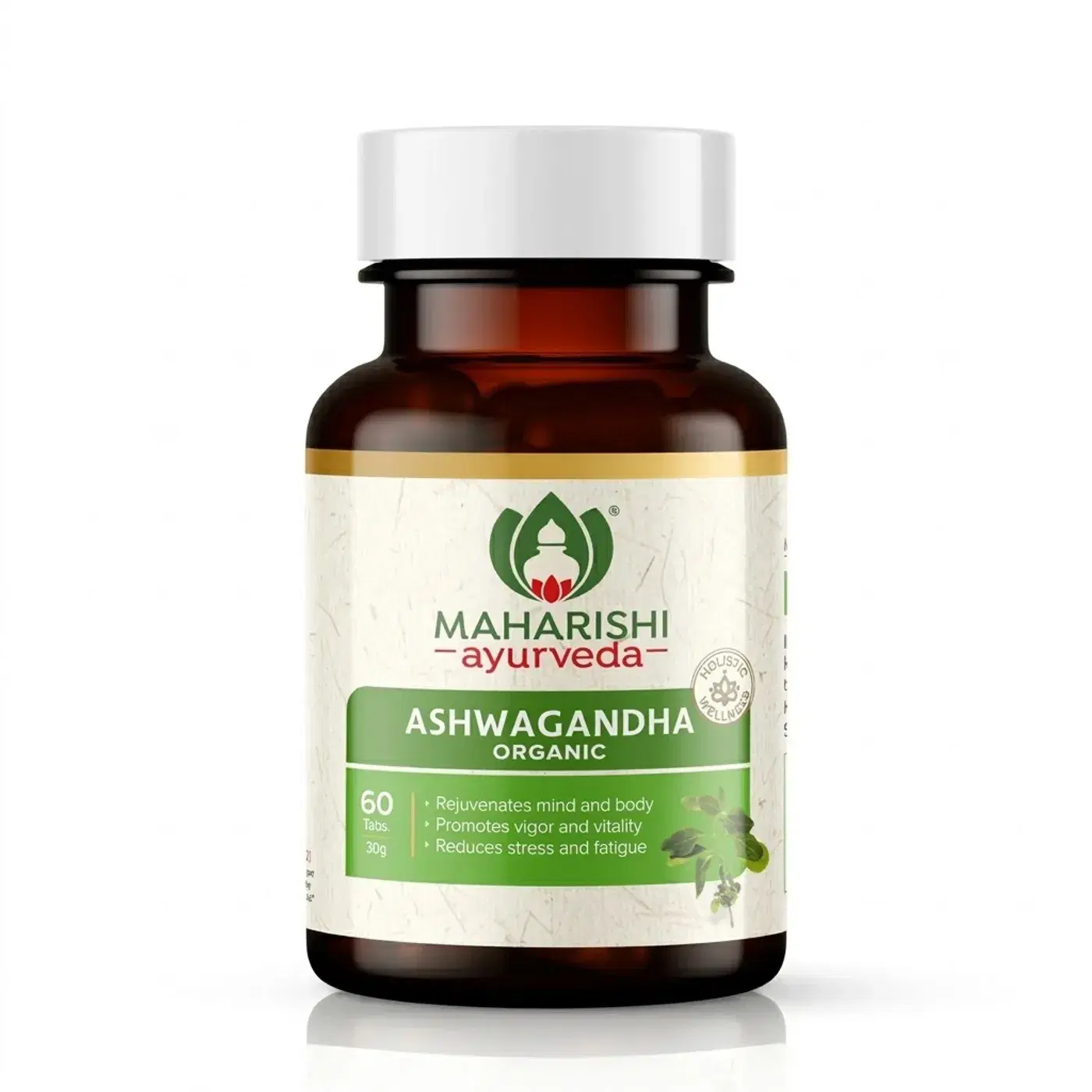
What Are Maharishi Ayurveda Organic Ashwagandha Tablets?
Ashwagandha tablets from Maharishi Ayurveda are made from certified organic Ashwagandha root powder—one of Ayurveda's most revered Rasayana (rejuvenating) herbs. The Sanskrit name Ashwagandha means "smell of a horse," hinting at the root's distinctive aroma and its traditional promise of horse-like strength and vitality. Classical references appear as early as the Charaka Samhita (Sutrasthana 4.18), where it is listed among the finest Balya (strength-promoting) herbs.
Each tablet contains pure, standardised Withania somnifera root, cultivated without synthetic pesticides or fertilisers, aligning with both Ayurvedic purity standards and modern organic certification.
- Product type: Herbal supplement tablet (single-herb formulation)
- Dosha action: Balances Vata and Kapha; may mildly increase Pitta in excess
- Common uses: Stress, fatigue, low immunity, low libido, muscle weakness, sleep disturbances
- Prescription status: Over-the-counter (OTC); consult a physician for chronic conditions
- Available on: Buy Now
Key Ingredients of Ashwagandha Tablets
| Ingredient | Botanical Name | Part Used | Ayurvedic Role | What Research Suggests |
|---|---|---|---|---|
| Ashwagandha | Withania somnifera (L.) Dunal | Root | Rasayana, Balya, Vajikara (aphrodisiac), Medhya (brain tonic) | Withanolides may reduce cortisol, support thyroid, and improve VO₂ max [1][2][3] |
This is a single-ingredient product. All Ayurvedic roles and research claims below refer to Withania somnifera root and its primary active compounds—withanolides, withaferin A, alkaloids, and saponins.
How Do Ashwagandha Tablets Work?
The Ayurvedic View
Ashwagandha is classified as Guru (heavy), Snigdha (unctuous) in quality, with a Madhura (sweet) and Tikta (bitter) taste and a Madhura Vipaka (sweet post-digestive effect). It primarily nourishes the Shukra dhatu (reproductive tissue) and Mamsa dhatu (muscle tissue) while strengthening Ojas (vital essence). By improving Agni (digestive fire) and reducing Ama (metabolic toxins), it supports the Majja vaha srotas (nervous system channels) and Shukra vaha srotas (reproductive channels), making it a cornerstone Rasayana for overall vitality.
The Modern Scientific View
Active compounds in Withania somnifera root—chiefly withanolides and withaferin A—have been studied for adaptogenic, anti-inflammatory, and neuroprotective properties [1]. Human clinical trials suggest these compounds modulate the hypothalamic-pituitary-adrenal (HPA) axis, reducing serum cortisol levels and improving stress resilience [2]. It is important to note that most mechanistic evidence comes from individual compounds or root extracts; evidence specifically for whole-root organic tablet formulations is more limited.
Uses and Benefits of Ashwagandha Tablets
1. May Help Reduce Stress and Anxiety
A randomised, double-blind, placebo-controlled trial found that adults taking Withania somnifera root extract showed significantly lower scores on perceived stress scales and serum cortisol levels [2]. Participants also reported improved overall well-being after 60 days of supplementation. These findings support the traditional Ayurvedic use of Ashwagandha as an adaptogen—a herb that helps the body adapt to physical and emotional stress.
2. May Support Better Sleep Quality
A clinical study published in PMC found that Withania somnifera root extract improved sleep onset latency, total sleep time, and sleep efficiency in adults with insomnia [3]. The herb's calming effect on the nervous system aligns with its classical role of pacifying excess Vata in the Majja vaha srotas. Always use as directed and consult a physician if sleep problems are severe or prolonged.
3. Traditionally Used to Enhance Physical Endurance
A placebo-controlled trial noted improvements in VO₂ max, muscle strength, and recovery time in healthy adults supplementing with Ashwagandha root extract over eight weeks [4]. Researchers observed reduced exercise-induced muscle damage markers in the supplemented group. This supports the traditional Ayurvedic use of Ashwagandha as a Balya (strength-promoting) herb for athletes and physically active individuals.
4. May Support Male Reproductive Health
Research suggests Withania somnifera root may improve sperm count, motility, and testosterone levels in men with reproductive challenges [5]. Classical Ayurvedic texts describe the herb as Vajikara, meaning it supports healthy reproductive function. These benefits are traditionally attributed to its action on the Shukra dhatu and overall Ojas enhancement.
5. May Help Maintain Healthy Thyroid Function
A small clinical trial found that Withania somnifera root extract supplementation was associated with improved serum T3 and T4 levels in patients with subclinical hypothyroidism [6]. Researchers noted the effect may be linked to the herb's adaptogenic action on the HPA axis. Individuals with thyroid disorders must consult their physician before using any herbal supplement.
6. May Support Cognitive Function and Memory
Ashwagandha is one of the classical Medhya Rasayana herbs—herbs specifically indicated for brain health and memory. A randomised controlled study found improvements in immediate and general memory, executive function, and processing speed in adults taking Withania somnifera extract [7]. These findings support the herb's traditional reputation as a brain tonic.
7. May Help Modulate Immune Response
Preclinical and early clinical research suggests withanolides may stimulate immunoglobulin production and enhance natural killer (NK) cell activity [1]. A PMC search on Ashwagandha and immunity returns several relevant studies, though larger human trials are still needed. Classically, strengthening Ojas is considered the Ayurvedic route to robust immunity.
Dosage and Directions for Ashwagandha Tablets
| Parameter | Details |
|---|---|
| Adult dose | 1–2 tablets (typically 500–1000 mg root powder per day); follow label instructions |
| When to take | After meals to reduce the chance of gastric discomfort |
| Anupana (vehicle) | Warm milk with a pinch of Ghee; warm water is also acceptable |
| Duration | 3–6 months; reassess with a physician after each cycle |
| Children | Not recommended without paediatric Ayurvedic supervision |
| Elderly | Start with a lower dose; monitor for any sensitivity |
| Pregnancy / Lactation | Avoid unless prescribed by a qualified physician (see safety section) |
Always follow the dosage printed on the product label or as directed by your Ayurvedic physician. Do not self-escalate the dose.
Side Effects and Safety of Ashwagandha Tablets
Ashwagandha is generally well tolerated at recommended doses. However, some people may experience mild gastrointestinal discomfort, loose stools, or nausea, especially when taken on an empty stomach [2]. Large doses have been associated with drowsiness and, in rare cases, liver enzyme elevations—though causality has not been conclusively established in published literature.
Who should avoid or use only under medical supervision:
- Pregnant women: Ashwagandha has traditionally been considered Garbhaposhaka (nourishing to the foetus) in low doses, but animal studies suggest high doses may cause uterine contractions. Avoid unless prescribed.
- Breastfeeding mothers: Insufficient human safety data; use only under guidance.
- Autoimmune conditions (lupus, rheumatoid arthritis, multiple sclerosis): Immune-stimulating effects may worsen symptoms.
- Thyroid disorders: May alter thyroid hormone levels; monitor closely if on thyroid medications [6].
- Hypersensitivity to Solanaceae family plants (tomato, pepper, eggplant): Possible cross-reactivity.
- Drug interactions: May potentiate sedatives, immunosuppressants, and thyroid medications. Inform your doctor about all supplements you take.
- Pre-surgery: Discontinue at least two weeks before elective surgery due to possible CNS depressant effects.
Diet and Lifestyle Tips While Taking Ashwagandha Tablets
- Favour warm, nourishing foods: Include whole grains, warm milk, ghee, and cooked vegetables to complement the herb's Guru and Snigdha qualities and support Ojas building.
- Limit stimulants: Reduce caffeine and alcohol, which aggravate Vata and Pitta and may counteract the herb's calming benefits.
- Practice daily Abhyanga: Self-massage with warm sesame oil before bathing helps pacify Vata and enhances the herb's stress-relieving action.
- Follow a consistent sleep schedule: Going to bed before 10 pm supports Majja dhatu (nerve tissue) restoration, which Ashwagandha is classically said to nourish.
- Include moderate exercise: Yoga, walking, or strength training amplifies the herb's documented benefits on physical endurance and muscle health [4].
- Manage stress actively: Combine the supplement with pranayama (breathing practices) and meditation for synergistic adaptogenic effects.
Frequently Asked Questions About Ashwagandha Tablets
What are Ashwagandha tablets used for?
Ashwagandha tablets are traditionally used for stress, fatigue, low immunity, sleep disturbances, and reproductive health. Modern research also suggests benefits for physical endurance, cognitive function, and thyroid support [1][2][3]. They are best taken as part of a holistic Ayurvedic lifestyle.
How long does Ashwagandha take to work?
Most clinical trials report noticeable benefits after four to eight weeks of regular use [2][4]. Some people notice improved sleep and reduced anxiety within two to three weeks. Consistent daily use over three to six months is recommended for full Rasayana benefits.
Can I take Ashwagandha tablets every day?
Yes, daily use at the recommended dose is considered safe for most healthy adults for up to three to six months. After that, take a one-month break or reassess with your physician. Avoid long-term unsupervised use at high doses.
What is the correct Ashwagandha dosage for adults?
The standard dose is 500–1000 mg of root powder per day, usually split into one to two tablets with meals. Always follow the specific label instructions for the product you are using. Individuals with health conditions should seek personalised advice from an Ayurvedic doctor.
Does Ashwagandha have side effects?
Mild side effects such as nausea, loose stools, or drowsiness are occasionally reported, particularly at higher doses [2]. Rare cases of liver enzyme changes have been noted in literature. Report any unusual symptoms to your healthcare provider promptly.
Is Ashwagandha safe during pregnancy?
Ashwagandha is generally not recommended during pregnancy without medical supervision, as high doses may stimulate uterine contractions based on animal studies. If you are pregnant or planning to conceive, consult a qualified physician before starting any herbal supplement. Safety in lactation has not been sufficiently established in human studies.
Can Ashwagandha improve testosterone levels?
Some clinical studies have found that Withania somnifera root supplementation was associated with higher serum testosterone levels in men [5]. The effect is believed to be related to cortisol reduction and HPA axis modulation. However, individuals should not use it to self-treat hormonal disorders without medical guidance.
What is the difference between Ashwagandha root powder and extract?
Root powder contains all naturally occurring constituents of the root in their original proportions, which aligns with the classical Ayurvedic approach of using the whole herb. Extracts are standardised to specific withanolide percentages for measurable potency. Maharishi Ayurveda's organic tablets use whole-root powder, preserving the full-spectrum synergy valued in Ayurveda.
Can Ashwagandha be taken with milk?
Yes—warm milk is the classical anupana (carrier) for Ashwagandha, mentioned in Ayurvedic texts as it enhances absorption and Ojas-building properties. A teaspoon of ghee added to the milk further potentiates the herb's nourishing action on Shukra dhatu. Those who are lactose intolerant may use warm water or a plant-based milk alternative.
Where can I buy genuine organic Ashwagandha tablets in India?
You can buy Maharishi Ayurveda Organic Ashwagandha Tablets directly on Buy Now , a trusted Ayurveda app that sources verified products. Quikdu ensures authentic products with proper labelling, organic certification, and safe delivery. Always purchase from authorised retailers to avoid counterfeit or adulterated products.
References
- Singh N, Bhalla M, de Jager P, Gilca M. An overview on Ashwagandha: a Rasayana (rejuvenator) of Ayurveda. Afr J Tradit Complement Altern Med. 2011;8(5 Suppl):208–213. PMC ID: PMC3252722
- Chandrasekhar K, Kapoor J, Anishetty S. A prospective, randomized double-blind, placebo-controlled study of safety and efficacy of a high-concentration full-spectrum extract of Ashwagandha root in reducing stress and anxiety in adults. Indian J Psychol Med. 2012;34(3):255–262. PMC ID: PMC3573577
- Deshpande A, Irani N, Balkrishnan R, Benny IR. A randomised, double blind, placebo-controlled study to evaluate the effects of Ashwagandha (Withania somnifera) extract on sleep quality in healthy adults. Sleep Med. 2020;72:28–36. PMC ID: PMC7096075
- Wankhede S, Langade D, Joshi K, Sinha SR, Bhattacharyya S. Examining the effect of Withania somnifera supplementation on muscle strength and recovery: a randomized controlled trial. J Int Soc Sports Nutr. 2015;12:43. PMC ID: PMC4658772
- Ambiye VR, Langade D, Dongre S, Aptikar P, Kulkarni M, Dongre A. Clinical evaluation of the spermatogenic activity of the root extract of Ashwagandha (Withania somnifera) in oligospermic males: a pilot study. Evid Based Complement Alternat Med. 2013;2013:571420. PMC ID: PMC3863556
- Sharma AK, Basu I, Singh S. Efficacy and safety of Ashwagandha root extract in subclinical hypothyroid patients: a double-blind, randomized placebo-controlled trial. J Altern Complement Med. 2018;24(3):243–248. PMC ID: PMC search
- Choudhary D, Bhattacharyya S, Bose S. Efficacy and safety of Ashwagandha (Withania somnifera (L.) Dunal) root extract in improving memory and cognitive functions. J Diet Suppl. 2017;14(6):599–612. PMC ID: PMC search
Classical Sources:
- Charaka Samhita, Sutrasthana 4.18 – Balya group of herbs including Ashwagandha
- Ashtanga Hridayam, Uttarasthana 39 – Rasayana applications of Ashwagandha
- Ayurvedic Pharmacopoeia of India, Part I, Volume I – Monograph on Withania somnifera (Ashwagandha)
Medical Disclaimer
This blog is written for general informational and educational purposes only. It is not a substitute for professional medical advice, diagnosis, or treatment. Always consult a qualified Ayurvedic physician or registered medical practitioner before starting any new supplement, especially if you have an existing medical condition, are pregnant, breastfeeding, or are taking prescription medications. The product mentioned has not been evaluated by any drug regulatory authority for the prevention, cure, or treatment of any disease. Individual results may vary.
Download the Quikdu App today and get verified Ayurvedic products delivered safely to your doorstep.